Monthly Archives: April 2025
Lessons from Isaac Asimov: Writing Tips for Success

Isaac Asimov (January 2, 1920 – April 6, 1992) was an American writer and a professor of biochemistry at Boston University. Asimov was considered one of the “Big Three” science fiction writers along with Robert A. Heinlein and Arthur C. Clarke. He was a prolific writer and wrote or edited more than 500 books within his lifetime. He is most well known for his science fiction, but also wrote mysteries, fantasy, nonfiction, and popular science.
He started with a series of science-fiction novels in the 1950’s, which includes the classic Foundation Series, and his writing in time extended into non-fiction. He wrote works for popular science, guidebooks to classic novels like Gulliver’s Travels and Paradise Lost, and even a 1,200-page Guide to the Bible.
He wrote on numerous other scientific and non-scientific topics, such as chemistry, astronomy, mathematics, history and literary criticism. He even wrote a few joke books and a book of limericks, but he didn’t stop there. He wrote a Guide to Shakespeare and a thorough Chronology of the World. By publishing his Three Laws of Robotics in 1942, Isaac Asimov defined rules for humans and robots to coexist.He brought a new understanding of robots and their relationship between machines and humans which led to modern movies like I, Robot and Bicentennial Man. Asimov enlightened our imaginations.
What can we learn from this amazing writer?
Make the time to write – no excuses. Asimov had many duties but always kept himself on a tight schedule and made the time for his writing. He went from can till can’t.
Stick to what you know. We all have a circle of competence – an area of earned knowledge. Learn to know the limit of that circle and stick within that limit to keep the advantage. (Asimov wrote the books but let screen writers execute the movies)
Find what you love and have unstoppable determination. (Asimov simply “had” to write. It would have been unfathomable not to.)
Never stop learning – have a thirst for knowledge and do massive amounts of research.
Never let the fear of criticism and perfectionism hold you back. Continue striving and writing. Be prepared for imperfection and correct your result, not your process.
Commit to your writing or everything will distract you. Don’t be stopped by a creative block. If one project isn’t working, move on to another.
“Knowledge is not only power; it is happiness,
and being taught is the intellectual analog of being loved. – Isaac Asimov
Solitaire
Optimize Your Writer’s Sites: Spring Cleaning Checklist
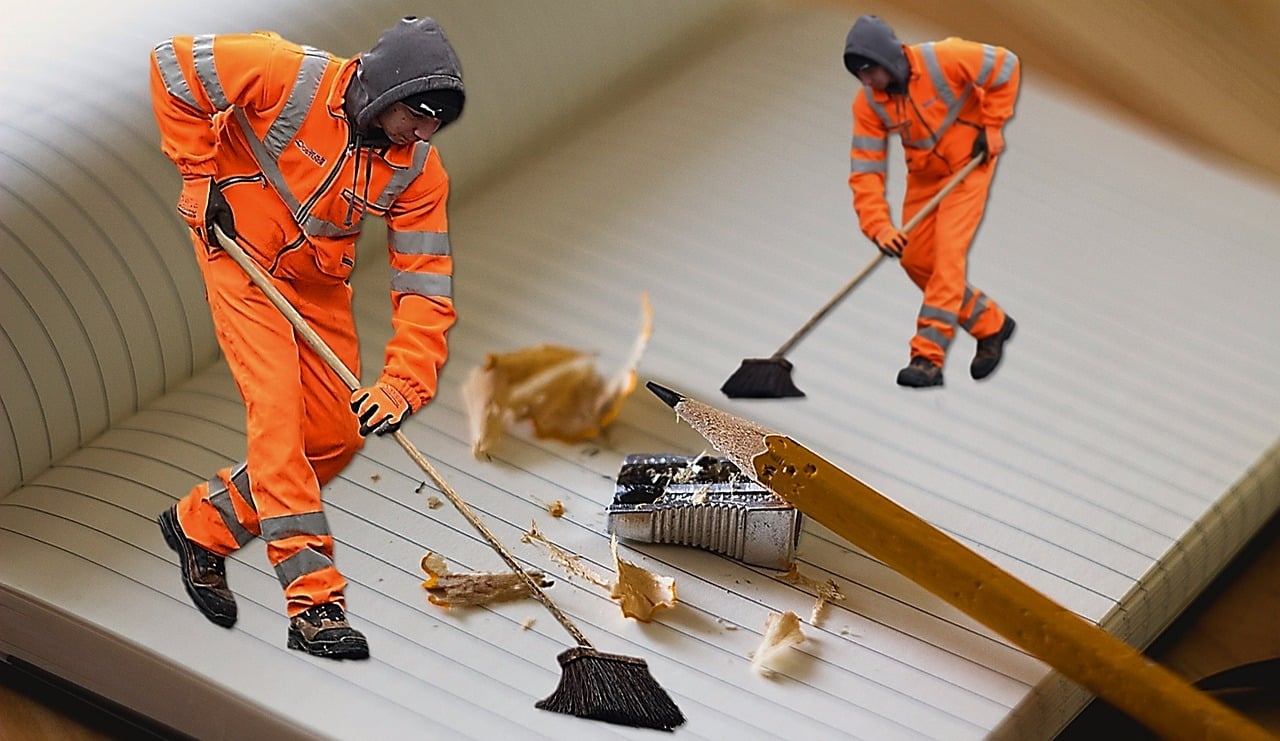
It’s the time of year that frequently focuses on Spring cleaning just about everywhere. It’s a great idea for authors and writers to do that as well – their websites, blogs and various other digital content. Here are some ideas that you may want to think about for your Spring cleaning checklist:
Update your Website and/or Blog:
Check for broken links
Does your site need a new overall look?
Update your Bio, Contact information and Photo
Make sure your site looks good on mobile and all browsers
Check your page load speed
Think about adding or deleting content in your sidebars
Redo your Header or Footer
Add or delete Social Media sites and the information on them
Backup your site
Email:
Go through your emails and unsubscribe to unnecessary ones
Archive material you want to keep
Delete old emails
Social Media Sites:
Do passwords need to be changed?
Update your Bio, Contact information and Photo
Do you need a new Header or Background?
Check privacy settings and information
Check all Book Sites:
Are all your books listed?
Check and update book descriptions if needed
Update Bios, Contacts and Photos
Are my sites linked to the proper places?
Backup:
Keep important files of data and images backed up to protect your content (perhaps an external hard-drive)
To maintain an engaging online presence, it’s important to give your readers regular updates. Get ready for a brilliant year ahead! Prepare to achieve your goals!!!
Good luck, and I hope you have a great year!
Solitaire

 Solitaire Parke - Sci-Fi/Fantasy Books