Category Archives: books about dragons
7 Tips and Tricks on How to Keep Your Dragon Happy!
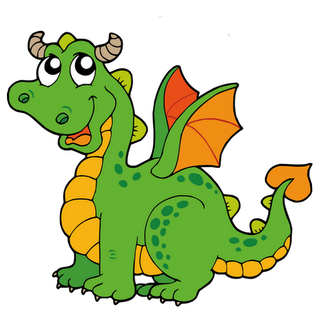 Since I am currently writing a series of books which are centered on Dragons, I thought it might be interesting to find out (from the Dragon Rider’s perspective) what makes them behave and keeps them happy.
The Dragomeir Series – Urban Fantasy
And the Forthcoming book
My main character, Tanis Theatra, has not only one, but three Dragons to manage on a daily basis. So, how do you deal with creatures that are potentially dangerous, if nothing else, because of their size (Enormous would be an understatement) and then there’s that little thing about breathing fire/plasma, or just getting in the way if their mood isn’t so great and they’re just hungry. How do you pacify or keep a Dragon in a good humor? Well, according to Tanis, here are some tips –
- The only thing to fear is fear itself. Just keep telling yourself that, two and a half tons isn’t all that big. Dragons have an uncanny sixth sense about where you are at all times. You’ll probably trip over their tail long before they step on you.
- Fire can be a problem during impression, but except for rare occasions, it’s mostly a matter of symbolism. Baby Aguivas on the other hand will teach you from experience not to stand at either end. Accidents only happen to the unwary.
- Amphiteres are born angry, so consequently get up on the wrong side of the grotto every day. They want to play, and it’s a thin ploy that lets them act out their frustrations, so play with them a lot. It helps in so many ways.
- A dragon will get grumpy if they’re not fed enough, but the same result happens when they’re fed too much. Either way brings out the pent up hostility in a reptile. Once every four days is a general rule of thumb, but understand, too much is worse. Dragons grow throughout their lives and the rider is the last word on how much they eat and grow.
- In a Dragon’s “Holder of Things”, a container much like a metal trash can, you can often find one of their favorite toys – a Frisbee – which makes them very happy. They can be extremely child-like in many ways.
- One of a Dragon’s favorite things is cherry candy and they will do pretty much whatever you want to get it.
- Dragons hear your thoughts and mirror your emotions. The more stable you become, the happier your dragon will be. It’s a good recipe for both parties when the rider is on his/her game.
So, now you’ve learned a few interesting facts about the Dragons of Dragomeir. They’re really quite compelling, although they can be very formidable if you make them angry. But to a Dragon Rider there is no greater creature in the universe!
Join Tanis and his friends as they uncover fascinating relationships, deceptions, betrayals, mysterious technology, and old-world charm and of course – Dragons!
Solitaire
Writers/Authors – 7 Tips to Help You Identify Your Target Market/Audience
A target audience is the person or group of people a piece of writing is intended to reach. This seems to be one of the most difficult questions to figure out for a writer/author. I, for one, have struggled with this one. So I’ve been doing some research and have uncovered some tips from multiple sources that have been helpful to me. Although we as authors would like to believe that the books we spend hours poring over are going to be loved by everyone, rarely is that the case. We all have our preferences as to what interests us, which accounts for the racks upon racks of books and genres that are found in bookstores and on the internet everywhere. In order to maximize the promotion of your books and put them in front of those who would most likely be your audience, you need to know which categories and genres they fall under so that readers can easily find the specific books that interest them. If you find and narrow your niche it will enable you to appeal to and reach more of the readers that will ultimately buy your book. What group/groups of readers are you targeting and how do you accomplish that tricky, but very important feat? Well, here are some tips I found that might be helpful:
- Try to isolate what types or groups of people the content of your book would interest. Is it about something historical? – history buffs, or elements of the future? – sci-fi, does it have elves or fairies? – fantasy, is it technical or educational? – educators and/or computer buffs, etc. If it has elements of several different topics it could appeal to a number of types of people. The groups of readers may overlap. (You may have multiple target audiences.)
- Pinpoint what is special about your book – what words would you use to describe it specifically to someone if they asked what it was about. (What is the hook?) Is your story scary, comedic, fantastic and/or futuristic, educational, technical, mysterious?
- Determine what age your book would most likely appeal to. (Demographic) Is it something kids, teens, young adults, adults, or a combination of readers would enjoy?
- Look at other books that are comparable to your book and applicable to the topic or subtopic in your book. identify who are their main readers/buyers. (Check at Amazon or Barnes & Noble to see what books are in their categories.)
- You can Google the reader demographics for magazines, publications or newsletters that are applicable to the topic or subtopic in your book.
- Investigate compatible author websites. See who is making comments and check out their profiles. They might be your target audiences.
- Examine the type of vocabulary you have used or are going to use in your book. How would it change depending on whether you were addressing children, teens, or adults? Who would relate to the way your characters are speaking.
Once you have identified your target audience, look at the users of the social media sites, publications, or blogs to see where those readers hang out. Start heading in those directions to find the people that are compatible with your writing, and connect with them to grow a fan base. Be where they are.
I hope this helps you to determine your target audience and better connect with your readers.
Solitaire
In what Point of View do you write?

When writing a novel there’s a universal question that most writers grapple with – how do you choose which Point of View to use? Point of view is the way the author allows you to “see” and “hear” what’s going on. There are several different points of view available to you and each one has several pros and cons. You must consider how the point of view you choose will impact the story you are trying to tell.
FIRST PERSON POV: When you tell a story through a viewpoint character using I or we. First person POV refers to the I, we, me, my, mine, us narrator, and is often the voice of the heroic character or a constant companion of the heroic character. Every detail of your story must be filtered through the storyteller. It is usually your main character. If your main character cannot see, hear, touch, smell, taste, think, know or feel it, you can’t include it. So, if you want to introduce something outside the range of your main character, you must use the words or observed actions of some other character who is in a position to see or know the events in order to convey the information you want the reader to have. Remember that the POV character cannot know the thoughts or unspoken feelings of another character.
Advantages –
- It’s Easier to feel empathy for the character since you are spending so much time in their brain
- It can give logic and motivations to characters that would seem otherwise evil, immoral, or otherwise not relatable.
- It more easily fleshes a character on the page by allowing the audience to listen to their voice for long periods of time.
Disadvantages –
- You are limited to writing about what the narrator can see or sense.
- The narrator must constantly be on stage or observing the stage.
- You can’t go into the minds of other characters.
SECOND PERSON POV: Where the author uses you and your – it is rare. Authors seldom speak directly to the reader. When you encounter this point of view you should pay attention. The author has made a daring choice, probably with a specific purpose in mind. Most times, second person point of view draws the reader into the story, almost making the reader a participant in the action.
Advantages –
- The reader can feel more intimately connected and involved with the story.
- It gives you the power to be different, even eccentric in the way you can speak to the reader so directly.
- It gives life to the characters in a way that other viewpoints don’t.
Disadvantages –
- It begins to feel quirky, whether you’re reading it or writing it.
- Novels solely written in second person make it more of a possibility that the reader may feel disconnected from the story.
THIRD PERSON POV: The he, she, it, they, them narrator, third person is the most common POV in fiction. It offers a variety of possibilities for limiting omniscience: information that the narrator and reader are privy to in the telling of the story.
Advantages –
- In omniscient mode, the narrator is all knowing and can move to anywhere in the story world.
- The narrator can also tell the reader things the main character doesn’t know, creating dramatic irony.
- Provides a broad perspective on the story, which is useful for epics involving many plotlines.
Disadvantages –
- Far less intimacy between reader and main character. The reader feels as though he is looking at characters rather than being a character.
- Narrator is reliable (this could also be seen as a pro).
- You can confuse yourself and the reader unless every voice is distinctive.
My urban fantasy books from The Dragomeir Series were written in first person. They are all from the main character Tanis’s point of view. Not knowing any more than Tanis did from moment to moment was used as a means by which to increase the potential bond between him and the reader. The reader goes where Tanis goes, sees what he sees, and has to catch up on events when he returns to a person or place. I wanted the reader to use Tanis’s ability to understand people and to figure out friend or foe, good and bad, but to ultimately do it together. I felt the books needed to be a more personal, casual account of what was happening to have a better shot at complete immersion with the story as it unfolds. I hope you enjoy reading the Dragomeir Series as much as I did writing it.
THE DRAGOMEIR SERIES –
- “The Emerald Dragon”
- “Flight of the Aguiva”
- And coming soon – “Egg of the Amphitere”
Solitaire . . .
What Point of View do you use and why?


 Solitaire Parke - Sci-Fi/Fantasy Books