Category Archives: improve writing
Lessons from Isaac Asimov: Writing Tips for Success
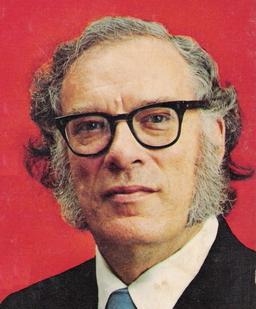
Isaac Asimov (January 2, 1920 – April 6, 1992) was an American writer and a professor of biochemistry at Boston University. Asimov was considered one of the “Big Three” science fiction writers along with Robert A. Heinlein and Arthur C. Clarke. He was a prolific writer and wrote or edited more than 500 books within his lifetime. He is most well known for his science fiction, but also wrote mysteries, fantasy, nonfiction, and popular science.
He started with a series of science-fiction novels in the 1950’s, which includes the classic Foundation Series, and his writing in time extended into non-fiction. He wrote works for popular science, guidebooks to classic novels like Gulliver’s Travels and Paradise Lost, and even a 1,200-page Guide to the Bible.
He wrote on numerous other scientific and non-scientific topics, such as chemistry, astronomy, mathematics, history and literary criticism. He even wrote a few joke books and a book of limericks, but he didn’t stop there. He wrote a Guide to Shakespeare and a thorough Chronology of the World. By publishing his Three Laws of Robotics in 1942, Isaac Asimov defined rules for humans and robots to coexist.He brought a new understanding of robots and their relationship between machines and humans which led to modern movies like I, Robot and Bicentennial Man. Asimov enlightened our imaginations.
What can we learn from this amazing writer?
Make the time to write – no excuses. Asimov had many duties but always kept himself on a tight schedule and made the time for his writing. He went from can till can’t.
Stick to what you know. We all have a circle of competence – an area of earned knowledge. Learn to know the limit of that circle and stick within that limit to keep the advantage. (Asimov wrote the books but let screen writers execute the movies)
Find what you love and have unstoppable determination. (Asimov simply “had” to write. It would have been unfathomable not to.)
Never stop learning – have a thirst for knowledge and do massive amounts of research.
Never let the fear of criticism and perfectionism hold you back. Continue striving and writing. Be prepared for imperfection and correct your result, not your process.
Commit to your writing or everything will distract you. Don’t be stopped by a creative block. If one project isn’t working, move on to another.
“Knowledge is not only power; it is happiness,
and being taught is the intellectual analog of being loved. – Isaac Asimov
Solitaire
Essential Tips for First-Time Authors

I think the most important first step is to ask yourself what kind of book it will be. Fiction, non-fiction, historical, horror, science fiction, fantasy? Before you can get started, this one question needs to be answered before it’s possible.
Regardless of age, life experience will play a part in what you decide to put to pen, but it will be infinitely easier if you write about what you know. Speaking of pens, how do you see yourself punching away at this new endeavor? Pen/pencil and paper or with a computer? Whatever happens to be within your grasp will be where you start but don’t let it stop you from working toward your dream. If you choose a computer, then the next decision will be which piece of software to use. So now we’re talking about what your budget looks like, and there is some good news. Free software is available to help get you started in lieu of purchasing Microsoft Word or other writing software. Do the research and find out which will be the best fit for you.
The next decision is what type of book are you seeing in the mind’s eye? A short story, a novella, a novel, or a compilation of novels making a series of interconnected characters? Figure that out and your task will be made easier.
With each book you write, expect there to be a huge amount of research before the smoke clears on your finished work. If you write about what you know, there will still be research to perform because none of us knows everything about any given subject.
The next question revolves around preliminary functions like an outline of where the book will be going from chapter to chapter, or do you really need one? From author to author this one question has a variety of responses and none of them are wrong. Some of us use outlines or storyboards, some of us don’t. Whichever way you go, write a lot.
I’m a proponent of critical thinking, and the long and short of that boils down to who, what, why, where, when, and how with every page you write. I call them the six deadlys, and you’ll get sick of asking the same questions every day of your writing career, but there’s no living without them. The day you stop asking these questions is the day mistakes will overtake you.
Talk frequently to friends and family about your book prior and during the writing process. It will help you to stay fresh as they give you added spark and suggestions talking about your project.
Read more than you write. Select books from other authors with the same genre and compare what you’ve written with what you’ve read. It will help the number of potential errors before they happen.
Research which titles have already been used and stay away from repeats whenever possible. Look for ways to make your story different, thereby making it stand out from the rest of the stories within the same genre.
Last, but certainly not least, know what your audience is looking for and stay within those parameters. If it’s a child’s book, stay away from adult concepts and write to the age level of your audience.
These are some ideas that might be helpful to a first-time author. There are many more things that I wish I had known when I started writing. I recently created a book that might help you to avoid some of the mistakes that I made along the way and make your path a little easier to get your works published. If you’ve always wanted to write a book and get it published, this will instruct you how to accomplish your dreams of being an author. Good luck and have a great writing experience! Click here for The Triple Threat.

Solitaire
Overcoming Stumbling Blocks for Aspiring Authors
The decision to write a novel is not as easy as it sounds and may have taken you a long time to realize creating a story was something to consider. According to me, and many, many other sources, it is normal to have doubts about whether we’re capable of performing at such a daunting level. As it turns out, we are our worst enemies, and if not kept in check, will also become the single judge and jury toward our path to success or failure. The most common stumbling blocks to our writing have been listed below, along with potential methods or solutions to bypass their fatalistic results.
Fear of ridicule from the people around you – 
When writing my first novel, it was difficult for me to tell anyone about the project, mainly because of an innate fear the book would never get finished. I anticipated the potential ridicule due to my failure if the project faltered before completion. Several drafts later and nine months of sweat…I finished. There was considerably less ridicule from acquaintances, so the takeaway here is you need to finish the book no matter how long it takes. The quicker you develop thick skin the better and remember, even the greats of literature had to start somewhere, and you may be the next great author. Bear in mind, not even the greats of literature will receive five-star reviews from everyone.
Motivational Issues –

The previous issues have a habit of seeping into our own values of procrastination and one thing leads to another until the project is placed onto a back burner with mild promises to pick it up again later. Some days simply don’t feel inspired and if you have too many in a row, it’s easier to put the project off than to continue. Creating a schedule, one that can be adhered to daily, is prime so be careful and don’t make it so rigid that it begins to feel like punishment. Life can and will get in the way of even the most well thought out plans, so during these times, we must learn to be flexible. During these times I either re-read the entire manuscript to rekindle fresh new ideas or go back over my outline to get myself back on track. It does not matter if you type the next section, the point is not to allow yourself to lose the inspiration.
Lack of confidence in your project –

This last stumbling block is another three-fold issue because sensing a lack of confidence in your project is, more than likely, a combination of the fear of ridicule, a lack of motivation, and not enough prep work as you geared up to start writing. The less you can visualize the nuts and bolts of your story, the more likely you are to lose interest in writing and then the lack of confidence creeps in around the edges. If you begin your project with abbreviated notes/outline, then it will be reflected in the lack of background for the remainder of the book. Good solid prep work with everything laid out like a road map will be a constant source of inspiration and depth to the story. The result of this is a sense of completeness that translates to confidence in what needs to be written next and gives you the feeling that the project can and will be finished. Lastly, see if you can pre-visualize between chapters or scenes and it will tell you what’s missing. Fill those gaps and watch the story come alive.
(If you are a new author or writer and need some helpful hints on writing a book and more, I have something that may benefit your efforts. Check it out HERE.)
Solitaire
New Book Available – The Triple Threat
For those who have always wanted to write a novel, but had no idea what the process includes – Here is a book that will give you the information you need to make that dream a reality.
The Triple Threat (How To Write A Novel And Stay Sane In The Process) gives you the answers to your questions plus much more, including examples and helpful templates to make your writing experience easier. It will also keep you from making many of the mistakes that first-time authors have made, myself included. Click on the book below to locate a copy –
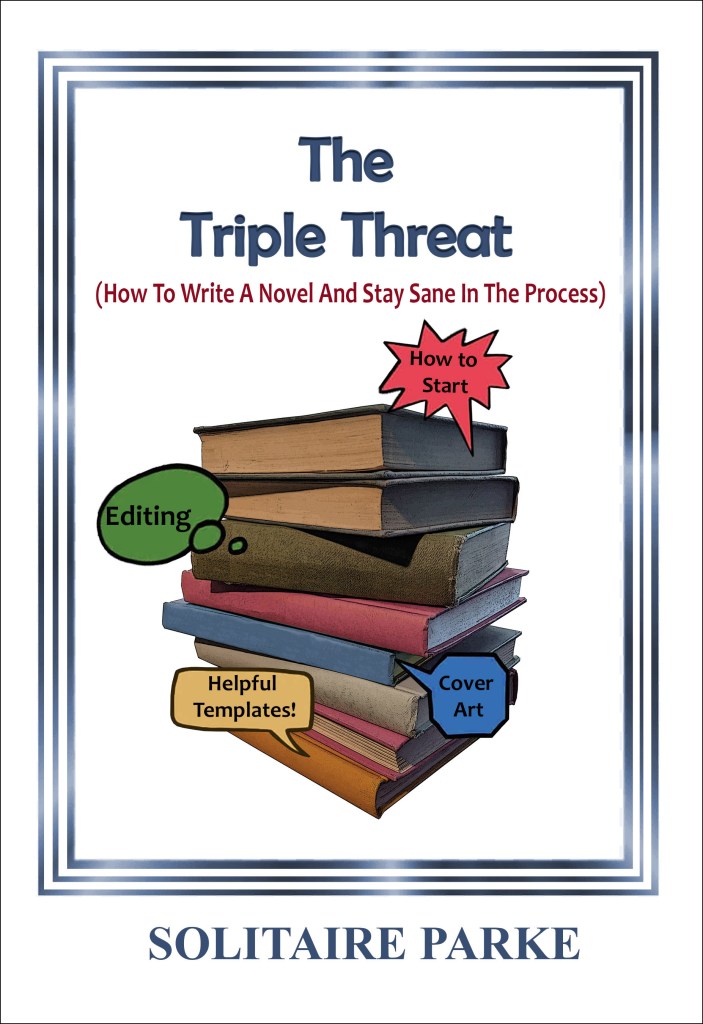
I hope this book is helpful in your writing journey.
Solitaire
Writing Tips from Well-known Authors

Writing success comes down to hard work, imagination, more hard work, passion – and then more hard work. Even if you are an absolutely fantastic writer who will be remembered for years to come, you will still most likely receive a good amount of criticism, rejection, and possibly ridicule before you get there. It happens to everyone, no matter whom they are, and should come as no real surprise. These writers, having been through it all, offer us some writing tips without pulling punches.
- I would advise anyone who aspires to a writing career that before developing his talent he would be wise to develop a thick hide. — Harper Lee
- A scrupulous writer, in every sentence that he writes, will ask himself at least four questions, thus: What am I trying to say? What words will express it? What image or idiom will make it clearer? Is this image fresh enough to have an effect? And he will probably ask himself two more: Could I put it more shortly? Have I said anything that is avoidably ugly?. — George Orwell
- Find a subject you care about and which you in your heart feel others should care about. It is this genuine caring, and not your games with language, which will be the most compelling and seductive element in your style. ― Kurt Vonnegut
- In the planning stage of a book, don’t plan the ending. It has to be earned by all that will go before it. — Rose Tremain
- You don’t start out writing good stuff. You start out writing crap and thinking its good stuff, and then gradually you get better at it. That’s why I say one of the most valuable traits is persistence. — Octavia Butler
- You can’t wait for inspiration. You have to go after it with a club. ― Jack London
- Introduce your main characters and themes in the first third of your novel. If you are writing a plot-driven genre novel make sure all your major themes/plot elements are introduced in the first third, which you can call the introduction. Develop your themes and characters in your second third, the development. Resolve your themes, mysteries and so on in the final third, the resolution. — Michael Moorcock
- Writing a book is a horrible, exhausting struggle, like a long bout with some painful illness. One would never undertake such a thing if one was not driven on by some demon that one can neither resist nor understand. — George Orwell
- There are three rules for writing a novel. Unfortunately, no one knows what they are. ― W. Somerset Maugham
- If you don’t have time to read, you don’t have the time — or the tools — to write. Simple as that. – Stephen King
- The nearest I have to a rule is a Post-it on the wall in front of my desk saying ‘Faire et se taire’ (Flaubert), which I translate for myself as ‘Shut up and get on with it.’— Helen Simpson
- Don’t tell me the moon is shining; show me the glint of light on broken glass.– Anton Chekhov
- Remember: when people tell you something’s wrong or doesn’t work for them, they are almost always right. When they tell you exactly what they think is wrong and how to fix it, they are almost always wrong. – Neil Gaiman
- The main rule of writing is that if you do it with enough assurance and confidence, you’re allowed to do whatever you like. (That may be a rule for life as well as for writing. But it’s definitely true for writing.) So write your story as it needs to be written. Write it honestly, and tell it as best you can. I’m not sure that there are any other rules. Not ones that matter.— Neil Gaiman
- If writing seems hard, it’s because it is hard. It’s one of the hardest things people do. – William Zinsser
- Get through a draft as quickly as possible. Hard to know the shape of the thing until you have a draft. Literally, when I wrote the last page of my first draft of Lincoln’s Melancholy I thought, Oh, shit, now I get the shape of this. But I had wasted years, literally years, writing and re-writing the first third to first half. The old writer’s rule applies: Have the courage to write badly. – Joshua Wolf Shenk
- Substitute ‘damn’ every time you’re inclined to write ‘very;’ your editor will delete it and the writing will be just as it should be. – Mark Twain
- The first draft of everything is shit. -Ernest Hemingway
- Start telling the stories that only you can tell, because there will always be better writers than you and there will always be smarter writers than you. There will always be people who are much better at doing this or doing that — but you are the only you. ― Neil Gaiman
- You must stay drunk on writing so reality cannot destroy you. ― Ray Bradbury
- Don’t take anyone’s writing advice too seriously. – Lev Grossman
Even famous authors on occasion have a tough time, and often go through periods of self-doubt. So take a lesson from them and never give up. Don’t put off your writing plans. There has never been a better time than now to realize your dream of becoming a published author. Tell your story and let your voice be heard!
Solitaire
A Writer’s Secret Ingredient?

Perusing the web this week I discovered a guest post that I found to be particularly outstanding and possibly very helpful to other writers. It was a recent post from author and guru of all things writing and publishing, Jane Friedman. I regularly get her newsletter, Electric Speed, which contains a myriad of information for writers. (I highly recommend subscribing to it, by the way.) https://janefriedman.com/.
The post is about a secret ingredient that can keep readers riveted to your book down to the very last line, rather than lose interest and have it fall to the floor. The guest was C. S. Lakin, a writing coach, workshop instructor, blogger and award-winning author of 30+ books.
So, check out this post at the following link –
https://www.janefriedman.com/the-secret-ingredient-of-a-commercially-successful-novel/
Solitaire
Forthcoming book – The Atrium
Fantasy Writing Tips From “Game of Thrones” Author, George R.R. Martin!

“Game of Thrones” is back for the final season. Who hasn’t watched or at least heard of the TV show, “Game of Thrones?” The author, George R. R. Martin, has been writing Fantasy books for years before this series came out. I have been a fan of his for a long time. Since I write Science Fiction/ Urban Fantasy myself, I was curious what his thoughts were on the subject. This article on the site, Lifehacker.com, peaked my curiosity. Here are his top 10 writing tips for Fantasy:
- Don’t limit your imagination
- Choose your point-of-view characters to broaden the narrative’s scope
- It’s okay to borrow from history
- Talk to real people for a believable point of view
- Grief is a powerful tool but don’t overdo it
- Violence should have consequences _ so spare nothing
- Avoid fantasy clichés
- The world is full of “grey” characters to draw from
- Juggling lots of characters takes skill and luck
- All men must die, but we don’t have to give way to despair
To get the details of each of these tips, click on the link below and enjoy!
“The best fantasy is written in the language of dreams. It is alive as dreams are alive, more real than real … for a moment at least … that long magic moment before we wake.”
George R.R. Martin
If you have any tips that have been helpful to you, I’d love to hear about them! Have a great day!
Solitaire
Check out my Dragomeir Series and Prequel books at my website –
33 Fiction Writing Tips

Writing fiction can be complex and multifaceted. There are countless details to consider throughout the process. There’s the initial brainstorming, the outlining, the countless hours of research, the actual writing, and the inevitable revising. As if that wasn’t enough, you still have the editing process, a monumental task of its own. All this to create what you hope will be an amazing work of fiction that readers will fall in love with. Not much to ask, right?
In doing this research, I’ve gathered an immeasurable amount of ideas concerning fiction writing. These writing tips, from countless sources, might be helpful to other writers tackling a novel by offering different viewpoints and by providing food for the creative process.
Hopefully, the tips below will help make writing that novel a little easier.
Writing Tips
- Read more fiction than you write.
- Don’t lock yourself into one genre (in reading or writing). Even if you have a favorite genre, step outside of it occasionally.
- Protect the time and space in which you write. Keep everybody away from it, even the people who are most important to you.
- Dissect and analyze stories you love from books, movies, and television to find out what works in storytelling and what doesn’t.
- Don’t write for the market. Tell the story that’s in your heart. You can make an outline before, during, or after you finish your rough draft. It will provide you with a road map, which is a powerful tool to have at your disposal.
- Some of the best fiction comes from real life. Jot down stories that interest you whether you hear them from a friend or read them in a news article.
- Real life is also a great source of inspiration for characters. Look around at your friends, family, and coworkers. Magnify and mix the strongest aspects of their personalities, and you’re on your way to crafting a cast of believable characters.
- Make your characters real through details rather than lengthy head-to-toe physical descriptions.
- The most realistic and relatable characters are flawed. Find something good about your villain and something dark in your hero’s past.
- Avoid telling readers too much about the characters. Instead, show the characters’ personalities through their actions and interactions.
- Give your characters difficult obstacles to overcome. Make them suffer. That way, when they triumph, it will be even more rewarding.
- Cultivate a distinct voice. Your narrator should not sound warm and friendly in the first few chapters and then objective and aloof in later chapters. The voice should be consistent, and its tone should complement the content of your book.
- Give careful consideration to the narrative point of view. Is the story best told in first person or third person? If you’re not sure, write a few pages in each narrative point of view to see what works best.
- Is your story moving too fast for readers or are they yawning through every paragraph? Are the love scenes too short? Are the fight scenes too long? Do you go into three pages of detail as your characters walk from point A to point B and then fly through an action sequence in a couple of short paragraphs? Pay attention to pacing!
- Infuse your story with rich themes to give it a humanistic quality. Examples of themes include sacrifice, redemption, rebirth, life and death, faith, destiny, etc. These are the big shadows that hover over your story.
- Make sure you understand that every story needs a beginning, middle, and an end.
- Use symbols and imagery to create continuity throughout your story. Think about how the White Rabbit kept popping up when Alice was adventuring through Wonderland or how the color red was used in the film American Beauty. These are subtle details that give your story great power.
- Every great story includes transformation. The characters change, the world changes, and hopefully, the reader will change too.
- Enrich your main plot with subplots. In real life, there’s a lot happening at once.
- There is a difference between a sub-plot and a tangent. Don’t go off on too many tangents.
- If you write in a genre, don’t be afraid to blur the lines. A horror story can have funny moments and a thriller can have a bit of romance.
- Make sure your setting is vivid and realistic even if you made it up.
- If you didn’t make up your setting, then do your best to get to the location and see it for yourself before you finish your manuscript. If that’s not possible, get busy researching.
- Give the readers room to think. You don’t have to tell your story in minute detail, including each minute of the plot’s timeline or all of the characters’ thoughts. Provide enough dots, and trust that the reader will be able to connect them when your story makes time jumps.
- Let the readers use their imaginations with your story’s descriptions as well. Provide a few choice details and let the readers fill in the rest of the canvas with their own colors.
- Don’t focus exclusively on storytelling at the expense of compelling language.
- Appeal to readers’ senses. Use descriptive words that engage the readers’ senses of taste, touch, sound, sight, and smell.
- Apply poetry techniques to breathe life into your prose. Use alliteration, onomatopoeia, metaphor, and other literary devices to make your sentences sing and dance.
- When rewriting, check for the following: plot holes, character inconsistencies, missing scenes, extraneous scenes, accuracy in research, and of course, grammar, spelling, and punctuation.
- As you revise, ask yourself whether every paragraph, sentence, and word is essential to your story. If it’s not, you know where the delete button is.
- Before your final revisions and before you send your manuscript out to any agents or editors, find your beta readers: join a writing group, take a fiction workshop, or hire a pro.
- Do not send out your rough draft. Go through the revision process at least three times before handing it out to your beta readers. The stronger it is when you bring in editors, the stronger those editors will be able to make it.
- Have fun. If you’re not enjoying writing, then maybe it’s not for you. If you’re not enjoying fiction writing, try something else, like poetry, blogging, or screenwriting. Be willing to experiment and you’ll find your way.
Were these writing tips helpful? Got any tips to add? Leave a comment!
Check on the website for my “Dragomeir Series” (for dragon lovers) and various other genres,
And updates on my latest series – “Daughter of the Dark Lord.” Interesting EXTRAS available too!
Solitaire
21 – Eye Opening Writing Tips from Well Known Authors

Writing success comes down to hard work, imagination, more hard work, passion – and then more hard work. Even if you are an absolutely fantastic writer who will be remembered for years to come, you will still most likely receive a good amount of criticism, rejection, and possibly ridicule before you get there. It happens to everyone, no matter whom they are, and should come as no real surprise. These writers, having been through it all, offer us some writing tips without pulling punches.
- I would advise anyone who aspires to a writing career that before developing his talent he would be wise to develop a thick hide. — Harper Lee
- A scrupulous writer, in every sentence that he writes, will ask himself at least four questions, thus: What am I trying to say? What words will express it? What image or idiom will make it clearer? Is this image fresh enough to have an effect? And he will probably ask himself two more: Could I put it more shortly? Have I said anything that is avoidably ugly? . — George Orwell
- Find a subject you care about and which you in your heart feel others should care about. It is this genuine caring, and not your games with language, which will be the most compelling and seductive element in your style. ― Kurt Vonnegut
- In the planning stage of a book, don’t plan the ending. It has to be earned by all that will go before it. — Rose Tremain
- You don’t start out writing good stuff. You start out writing crap and thinking its good stuff, and then gradually you get better at it. That’s why I say one of the most valuable traits is persistence. — Octavia Butler
- You can’t wait for inspiration. You have to go after it with a club. ― Jack London
- Introduce your main characters and themes in the first third of your novel. If you are writing a plot-driven genre novel make sure all your major themes/plot elements are introduced in the first third, which you can call the introduction. Develop your themes and characters in your second third, the development. Resolve your themes, mysteries and so on in the final third, the resolution. — Michael Moorcock
- Writing a book is a horrible, exhausting struggle, like a long bout with some painful illness. One would never undertake such a thing if one was not driven on by some demon that one can neither resist nor understand. — George Orwell
- There are three rules for writing a novel. Unfortunately, no one knows what they are. ― W. Somerset Maugham
- If you don’t have time to read, you don’t have the time — or the tools — to write. – Stephen King
- The nearest I have to a rule is a Post-it on the wall in front of my desk saying ‘Faire et se taire’ (Flaubert), which I translate for myself as ‘Shut up and get on with it.’” — Helen Simpson
- Don’t tell me the moon is shining; show me the glint of light on broken glass.– Anton Chekhov
- Remember: when people tell you something’s wrong or doesn’t work for them, they are almost always right. When they tell you exactly what they think is wrong and how to fix it, they are almost always wrong. – Neil Gaiman
- The main rule of writing is that if you do it with enough assurance and confidence, you’re allowed to do whatever you like. (That may be a rule for life as well as for writing. But it’s definitely true for writing.) So write your story as it needs to be written. Write it honestly, and tell it as best you can. I’m not sure that there are any other rules. Not ones that matter.— Neil Gaiman
- If writing seems hard, it’s because it is hard. It’s one of the hardest things people do. – William Zinsser
- Get through a draft as quickly as possible. Hard to know the shape of the thing until you have a draft. Literally, when I wrote the last page of my first draft of Lincoln’s Melancholy I thought, Oh, shit, now I get the shape of this. But I had wasted years, literally years, writing and re-writing the first third to first half. The old writer’s rule applies: Have the courage to write badly. – Joshua Wolf Shenk
- Substitute ‘damn’ every time you’re inclined to write ‘very;’ your editor will delete it and the writing will be just as it should be. – Mark Twain
- The first draft of everything is shit. -Ernest Hemingway
- Start telling the stories that only you can tell, because there’ll always be better writers than you and there’ll always be smarter writers than you. There will always be people who are much better at doing this or doing that — but you are the only you. ― Neil Gaiman
- You must stay drunk on writing so reality cannot destroy you. ― Ray Bradbury
- Don’t take anyone’s writing advice too seriously. – Lev Grossman
Even famous authors on occasion have a tough time, and often go through periods of self-doubt. So take a lesson from them and never give up. Don’t put off your writing plans. There has never been a better time than now to realize your dream of becoming a published author. Tell your story and let your voice be heard!
Solitaire
6 Ways to Improve Your Writing!

- How often do you use the word “very” in your writing? It is often extremely overused and can make your sentences sound weak. So check out this site. It gives you 128 ways to avoid using this word by replacing it with stronger more vibrant ones.
http://writetodone.com/128-words-to-use-instead-of-very/
- Need some help with your grammar? Take the following quiz and find out how much you know.
http://writetodone.com/grammar-tips-for-writers/
- Book titles, blog headings, or other articles are sometimes difficult to come by. You might need a little help occasionally. Here are 7 tools to provide that help.
http://writetodone.com/bestselling-book-titles-2/
- Do you love the television show “Game of Thrones” or the books? Here are 5 lessons to be learned from them.
http://www.thecreativepenn.com/2014/04/08/writing-game-of-thrones/
- Do you know how to research a novel, and when to stop? This article could be helpful.
http://www.thecreativepenn.com/2017/01/18/research-a-novel/
- Tips for finding those eye-catching images for your books, articles, or blogs.
Which ones are your favorites?
If these were helpful to you, please pass them on!
Visit me at my website – sp@solitaireparke.com
Solitaire


 Solitaire Parke - Sci-Fi/Fantasy Books