Category Archives: Dragomeir Series
Writers/Authors – 7 Tips to Help You Identify Your Target Market/Audience
A target audience is the person or group of people a piece of writing is intended to reach. This seems to be one of the most difficult questions to figure out for a writer/author. I, for one, have struggled with this one. So I’ve been doing some research and have uncovered some tips from multiple sources that have been helpful to me. Although we as authors would like to believe that the books we spend hours poring over are going to be loved by everyone, rarely is that the case. We all have our preferences as to what interests us, which accounts for the racks upon racks of books and genres that are found in bookstores and on the internet everywhere. In order to maximize the promotion of your books and put them in front of those who would most likely be your audience, you need to know which categories and genres they fall under so that readers can easily find the specific books that interest them. If you find and narrow your niche it will enable you to appeal to and reach more of the readers that will ultimately buy your book. What group/groups of readers are you targeting and how do you accomplish that tricky, but very important feat? Well, here are some tips I found that might be helpful:
- Try to isolate what types or groups of people the content of your book would interest. Is it about something historical? – history buffs, or elements of the future? – sci-fi, does it have elves or fairies? – fantasy, is it technical or educational? – educators and/or computer buffs, etc. If it has elements of several different topics it could appeal to a number of types of people. The groups of readers may overlap. (You may have multiple target audiences.)
- Pinpoint what is special about your book – what words would you use to describe it specifically to someone if they asked what it was about. (What is the hook?) Is your story scary, comedic, fantastic and/or futuristic, educational, technical, mysterious?
- Determine what age your book would most likely appeal to. (Demographic) Is it something kids, teens, young adults, adults, or a combination of readers would enjoy?
- Look at other books that are comparable to your book and applicable to the topic or subtopic in your book. identify who are their main readers/buyers. (Check at Amazon or Barnes & Noble to see what books are in their categories.)
- You can Google the reader demographics for magazines, publications or newsletters that are applicable to the topic or subtopic in your book.
- Investigate compatible author websites. See who is making comments and check out their profiles. They might be your target audiences.
- Examine the type of vocabulary you have used or are going to use in your book. How would it change depending on whether you were addressing children, teens, or adults? Who would relate to the way your characters are speaking.
Once you have identified your target audience, look at the users of the social media sites, publications, or blogs to see where those readers hang out. Start heading in those directions to find the people that are compatible with your writing, and connect with them to grow a fan base. Be where they are.
I hope this helps you to determine your target audience and better connect with your readers.
Solitaire
In what Point of View do you write?

When writing a novel there’s a universal question that most writers grapple with – how do you choose which Point of View to use? Point of view is the way the author allows you to “see” and “hear” what’s going on. There are several different points of view available to you and each one has several pros and cons. You must consider how the point of view you choose will impact the story you are trying to tell.
FIRST PERSON POV: When you tell a story through a viewpoint character using I or we. First person POV refers to the I, we, me, my, mine, us narrator, and is often the voice of the heroic character or a constant companion of the heroic character. Every detail of your story must be filtered through the storyteller. It is usually your main character. If your main character cannot see, hear, touch, smell, taste, think, know or feel it, you can’t include it. So, if you want to introduce something outside the range of your main character, you must use the words or observed actions of some other character who is in a position to see or know the events in order to convey the information you want the reader to have. Remember that the POV character cannot know the thoughts or unspoken feelings of another character.
Advantages –
- It’s Easier to feel empathy for the character since you are spending so much time in their brain
- It can give logic and motivations to characters that would seem otherwise evil, immoral, or otherwise not relatable.
- It more easily fleshes a character on the page by allowing the audience to listen to their voice for long periods of time.
Disadvantages –
- You are limited to writing about what the narrator can see or sense.
- The narrator must constantly be on stage or observing the stage.
- You can’t go into the minds of other characters.
SECOND PERSON POV: Where the author uses you and your – it is rare. Authors seldom speak directly to the reader. When you encounter this point of view you should pay attention. The author has made a daring choice, probably with a specific purpose in mind. Most times, second person point of view draws the reader into the story, almost making the reader a participant in the action.
Advantages –
- The reader can feel more intimately connected and involved with the story.
- It gives you the power to be different, even eccentric in the way you can speak to the reader so directly.
- It gives life to the characters in a way that other viewpoints don’t.
Disadvantages –
- It begins to feel quirky, whether you’re reading it or writing it.
- Novels solely written in second person make it more of a possibility that the reader may feel disconnected from the story.
THIRD PERSON POV: The he, she, it, they, them narrator, third person is the most common POV in fiction. It offers a variety of possibilities for limiting omniscience: information that the narrator and reader are privy to in the telling of the story.
Advantages –
- In omniscient mode, the narrator is all knowing and can move to anywhere in the story world.
- The narrator can also tell the reader things the main character doesn’t know, creating dramatic irony.
- Provides a broad perspective on the story, which is useful for epics involving many plotlines.
Disadvantages –
- Far less intimacy between reader and main character. The reader feels as though he is looking at characters rather than being a character.
- Narrator is reliable (this could also be seen as a pro).
- You can confuse yourself and the reader unless every voice is distinctive.
My urban fantasy books from The Dragomeir Series were written in first person. They are all from the main character Tanis’s point of view. Not knowing any more than Tanis did from moment to moment was used as a means by which to increase the potential bond between him and the reader. The reader goes where Tanis goes, sees what he sees, and has to catch up on events when he returns to a person or place. I wanted the reader to use Tanis’s ability to understand people and to figure out friend or foe, good and bad, but to ultimately do it together. I felt the books needed to be a more personal, casual account of what was happening to have a better shot at complete immersion with the story as it unfolds. I hope you enjoy reading the Dragomeir Series as much as I did writing it.
THE DRAGOMEIR SERIES –
- “The Emerald Dragon”
- “Flight of the Aguiva”
- And coming soon – “Egg of the Amphitere”
Solitaire . . .
What Point of View do you use and why?
Top 10 Fantasy Writing Tips From “Game Of Thrones” Author George R.R. Martin!

Just about everyone, including me, has watched or at least heard of the TV show, “Game of Thrones.” The author, George R. R. Martin, has been writing Fantasy books for many years before this series came out. I have been a fan of his for a long time. Since I write Urban Fantasy myself, I was curious what his thoughts were on the subject. So I thought this article on the site, Lifehacker.com, was rather interesting. His top 10 writing tips for Fantasy are as follows:
- Don’t limit your imagination
- Choose your point-of-view characters to broaden the narrative’s scope
- It’s okay to borrow from history
- Talk to real people for a believable point of view
- Grief is a powerful tool_but don’t overdo it
- Violence should have consequences _ so spare nothing
- Avoid fantasy clichés
- The world is full of “grey” characters to draw from
- Juggling lots of characters takes skill and luck
- All men must die, but we don’t have to give way to despair
To read the details of each of these tips, click on the link below and enjoy!
Any tips you’d like to share? I’m always open to new ideas for improving my writing. See you soon.
Solitaire
Woohoo, it’s Memorial Day Weekend!!!
Hi, Solitaire here. It’s that occasion again – Memorial Day Weekend. Time to take a break, even if it’s a short one, to spend some quality moments with family, or just relax and do something other than work. You deserve it! As an author, that’s hard for me to do. Not the spending time with family part, but the not using the time to write part. I almost feel guilty not using every spare moment to sit down at my computer and continue to write my latest novel. I think that’s probably a universal feeling with most authors. But like any profession, authors need to get away from their chosen profession once in a while. So take this weekend to unwind a little, and maybe it will spur those creative minds on to bigger and better ideas for your up and coming writing endeavors!
Have a great mini-vacation and enjoy some much needed relaxation! Happy Writing!
Solitaire
You can check out my just released Dragomeir Series Book Two, “Flight of the Aguiva” here –
Location – Location – Location – THE SOUTHWEST DESERTS
The primary location of my book, “The Emerald Dragon”, is in the deserts of the Southwestern United States. So the following is a short description of those deserts for anyone that might find it interesting. My lead character, Tanis, finds it to be one of the most beautiful places on earth.
The Sonoran Desert covers large parts of the Southwestern United States in Arizona and California, and of Northwestern Mexico in Sonora, Baja California and Baja California Sur. It is the hottest desert in North America, with an area of 280,000 square kilometers (110,000 sq mi). The western portion of the United States–Mexico border passes through the Sonoran Desert. It is home to the cultures of over seventeen contemporary Native American tribes, with settlements at American Indian reservations in California and Arizona, as well as populations in Mexico.
The desert includes 60 mammal species, 350 bird species, 20 amphibian species, over 100 reptile species, 30 native fish species, over 1000 native bee species, and more than 2,000 native plant species. The area southwest of Tucson and near the Mexican border is a vital habitat for the only population of Jaguars living within the United States.
The Sonoran is the only place in the world where the famous saguaro cactus grows in the wild. Cholla , beavertail, hedgehog, fishhook, prickly pear, nightblooming cereus, and organ pipe are other types of cacti found here. Shrubs include the creosote bush, bur sage, indigo bush, and Mormon tea. It also has wildflowers such as desert sunflowers, sand verbena, and evening primroses. There are also desert willows, palo verde trees, ocotillo, and desert ironwood.
The Mojave Desert includes both the infamous Death Valley and slightly less infamous Las Vegas Valley. An existence in the Mojave means coping with a range of extreme conditions. It is considered a hot-cold desert, meaning it’s hot in the summer — but also extremely cold in the winter, dipping below freezing at night. These extremes have led to plant and animal species that are uniquely adapted to the Mojave. The desert averages about five inches of precipitation a year. Death Valley, which is about 282 feet below sea level, is the lowest point in the Western Hemisphere, and is in the Mojave Desert. It is also the hottest and the driest point in North America. In fact, it is the second hottest place on the Earth; 134 degrees Fahrenheit is the highest temperature ever recorded here. This region also consists of several high-rising mountain peaks, like the Telescopic peak, which is about 11,000 feet high.
The desert is home to numerous unique and interesting plant and animal species that have adapted to this arid landscape. Although the Mojave isn’t home to a large amount of plant life, it is home to numerous unique and interesting plant and animal species that have adapted to this arid landscape. It is home to mistletoe, a well-known Christmas decoration, and also to the slow-growing Joshua trees, which are actually not trees, but water-storing succulents. These plants grow to between 20 and 70 feet in height and live around 150 years.
The Mojave is home to the camel spider, the short-horned lizard, rattlesnakes, king snakes, a wide variety of lizards and the desert tortoise. Small desert mammals include the antelope squirrel, the kangaroo rat, jack rabbit, desert cottontail, the coyote, kit fox, and the bobcat. Large herbivores include big horn sheep, mule deer and wild burros. Predatory birds include the red-tailed hawk, barn owl, golden eagle and roadrunner. Scavengers include vultures and ravens. Herbivores include Gambel’s quail and the mourning dove.

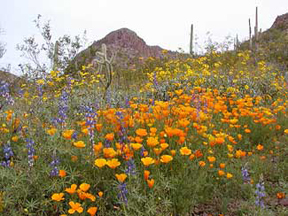
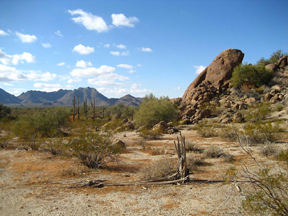

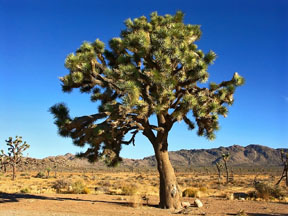
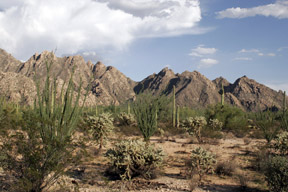
You’ll discover a whole new world in the desert at Mt. Drago, the home of Tanis, and his dragon, Demios, in Book One of the Dragomeir Series, “The Emerald Dragon.”
Book Two, “Flight of the Aguiva” will be out very soon! The adventure continues . . .
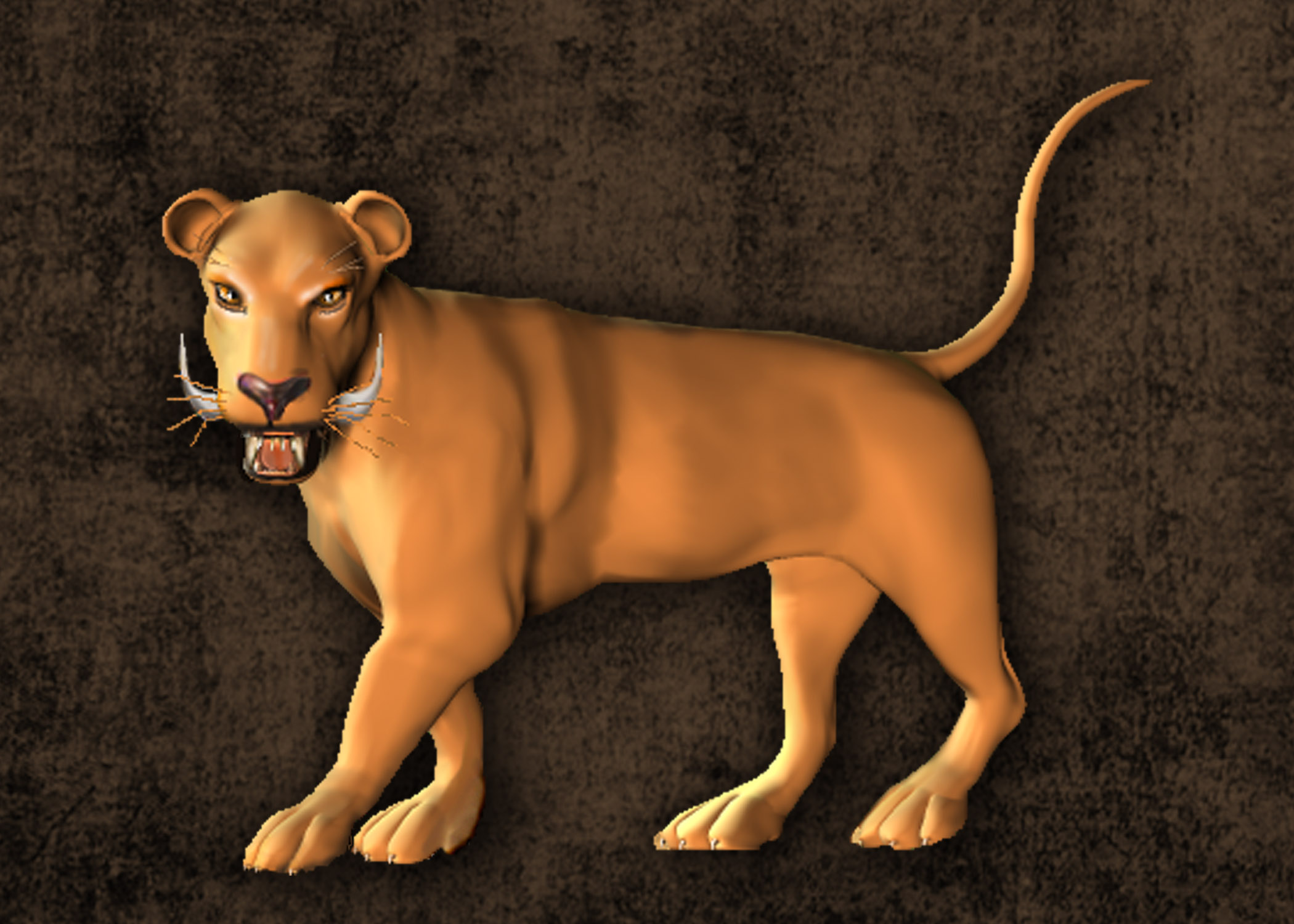
DRAGOMEIR SERIES – Creature Feature – “The Sabers”
This time on Creature Features let’s take a closer look at the species known as The Sabers. These creatures can be found in Book Two of the Dragomeir Series, “Flight of the Aguiva.” They are one of the older races of non-human, quadrupeds and considerably larger than most. Their leader is an enormous Alpha male named Suyet Suun. Try to imagine a nine foot long, eight hundred pound Bengal Tiger in a yellowish gold color, with tusks coming off the side of his face – ten inch long, large tusks. He was at the very least half again the size of a Bengal. Huge feet below a shear muscled body, and topped off with the most regal of heads. That was Suyet Suun. The females of The Sabers are smaller versions but just as beautiful. The Sabers are mammals and give birth in the same way as the feline species we have on Earth.
These creatures are fully sentient, and thanks to the demons on the Provinces, have been placed on the endangered species list. The demons hunt them for sport, or did until they moved to Mt. Drago. They are peaceful, but become warlike when their young are threatened. Fierce fighters, they unfortunately do not have the numbers to fend off the superior volume of the Hordes of Hell.
Happy Holidays – Merry Christmas!!!
It’s that time of year again. . . The Holidays! The Christmas tree, THE Christmas tree went up in Commons at Mt. Drago. This one is special, and has been decorated differently for the first time ever. We thought it was time to honor the very creatures that we hold stewardship to. They love everything about Christmas and take part in all of the festivities. This year we asked the kids of Mt. Drago to pick their favorite dragon and create a Christmas ornament for them. At the end of the season all of the ornaments will be gathered up and boxed for next year’s season. Hopefully we’ll do that again in all the years to come. We snapped a photo so you could see this year’s tree as well. We hope you enjoy it!
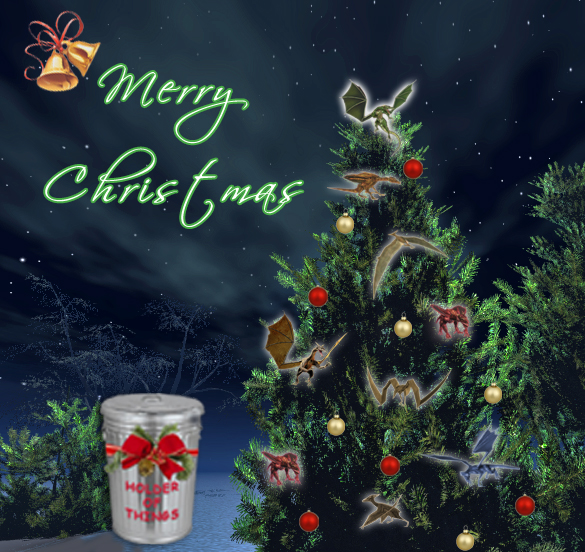
~ Happy Holidays from Mt. Drago ~
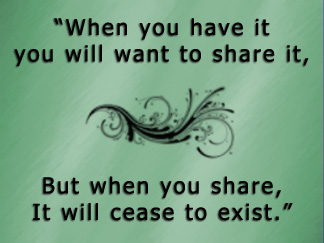
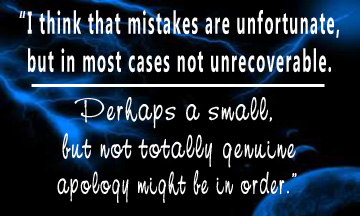
I am in the final stretch of Book Two in the Dragomeir Series, “Flight of the Aguiva.” It will be coming out in the spring of 2015, so get ready for more adventure and excitement with the people and creatures of Mt. Drago. Here are some of my favorite quotes from “Flight of the Aguiva.” Have a wonderful Holiday Season Everyone!

Check out my Author’s Links
Holidays at Mt.Drago
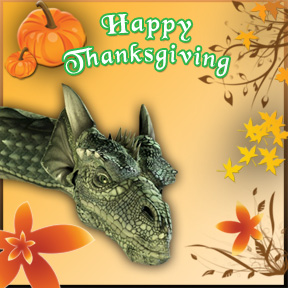
In The Dragomeir Series, Book One – “The Emerald Dragon,” most of the dwellers of Mt. Drago are technically not from around Arizona or even from earth for that matter. The ones that are from here celebrate holidays in the same way as those who live in the smaller world. Good examples of that would be people like Bob Harris, and Ivory McNeil, both of whom came to the mountain from known places like Chicago and New York. During holidays like the one coming up, Thanksgiving, they celebrate in the same traditional ways that other people have for decades. Turkey, dressing, cranberry sauce, and all of the trimmings served by the resident Stewards will be held this year at Mt. Drago on November, 27th 2014 at around noon. Hope to see you there! Turkey roasted over an open fire . . . nothing better!


 Solitaire Parke - Sci-Fi/Fantasy Books