Blog Archives
Overcoming Stress: Tips for Positive Thinking

We all lead stressful lives in one way or another. As an author there are many factors that can cause stress. Writer’s block, fear of judgement from others, perfectionism which can lead to over-editing and lots of self doubt, the pressure of meeting deadlines, rejection which causes a lack of confidence and motivation, juggling too many projects, being responsible for marketing and promotion of your works, and possibly financial concerns as well. Authors often question their own writing abilities and wonder whether their stories are good enough. It can all weigh heavy on your mind.
There are many sites online which can be of help to writers in every aspect. To support you and anyone really, I recently came across an article from the Mayo Clinic that I thought was interesting about stress management and how it can affect your health and well-being.
Are you a positive or a negative thinker? Positive thinking doesn’t mean that you ignore life’s less enjoyable situations. It just means that you approach unpleasantness in a more positive and productive way. You believe the best is going to happen, not the worst. The automatic thoughts that run through your head can be either positive or negative. If they are negative, your outlook on life is likely to be gloomy or cynical, which is certainly not a health benefit. You can learn to change these negative thoughts into more positive ones by creating new habits.

The following are a few ways in which to change your thinking and behave more positively.
First, identify areas in your life that need a change, whether it be at work, life changes, or a relationship. Focus on a few small areas and then approach them in a more positive light. You will eventually teach yourself to look at things differently.
Keep yourself in check during the day by periodically stopping to evaluate how you are thinking. Are you falling back into being negative or are you forcibly working on being positive?
Stay open to humor by smiling or laughing, even during times of difficulty. Laughter is a stress-reducing tool.
Aim for a healthy lifestyle that includes some kind of exercise to break up each day and help you manage stress. If you are sitting all day, take a break and go for a walk. Look at something different than what you normally would. Sometimes just being out-of-doors will help you clear your mind.
Keep yourself surrounded by positive people who will support you in good times and bad. You need helpful advice and feedback. Keep your distance from negative people or situations.
Follow a simple rule – don’t say anything to yourself that you would not say to someone else. Be kind and encouraging to yourself. Don’t expect perfection, just do your best.
Think about the things you are thankful for in your life and dwell on those things. There is always someone who has it harder than you. Always be thankful for what you have.
You may not become an optimist overnight, but with practice you will become less critical of the world around you. When your state of mind is one of optimism, you are better able to handle stressful situations that come your way in a more constructive manner, and that will contribute to a much healthier and happier life.
Solitaire
Tips to Help You Get Through Covid!

Wow, none of us expected 2020 to be such an unbelievably worrisome and stressful year! It’s just almost too much to comprehend sometimes that this pandemic is really happening. Who would have thought? We went from a somewhat “normal” lifestyle to a world where everyone and everything has just gone crazy. But since it is a reality, we’ve had to learn to adapt, change and just learn to deal with a life that is very different than what we wish it would be. Change can be super hard and stressful, but if we can remain positive in the midst of it all, we might even come out of this hardship as better, more resilient and caring people. At least that’s how I choose to look at everything since I can’t change it anyway.
Here are a few tips that might help you keep your sanity during this difficult time –
If you are a religious person, keep your faith strong and pray often – about everything and everyone. Keeping your mind focused, especially on helping others, will keep you grounded each day.
Try to keep your sleeping and eating patterns the same every day in order to stay as healthy as possible. Get as much sleep as you can.
Exercise – it keeps your body strong and keeps your mind healthy too.
Be sure to make time to do activities that you love – things that make you feel happy, like painting, cooking, singing, playing a musical instrument, reading, or any indoor or outdoor sport where you can be safe.
Stay connected with others so you don’t feel so isolated. We have so many different devices these days that can keep us connected. And don’t forget your neighbors or those who may need a friendly phone call. We’re all in this together, and people need each other.
Find as many ways as you can to have positive emotions – joy, gratitude, love – all the good things that you can focus on. Negativity never helped anyone.
Enjoy simple moments like sipping a cup of tea, laughing at funny moments with your children or grandchildren, playing with your pets, watching a special movie, or just having a conversation with a friend or family member.
Take whatever action that you can to achieve goals you have set for yourself. It can be one of the best antidotes to anxieties. Don’t let anything stop you from achieving what you want. There is always something to be done.
I look at it this way. There will inevitably be hardships in this life. We have to remember to be grateful in spite of the difficulties in which we find ourselves. We learn from those hard times and it makes us better and hopefully wiser people. It teaches us not to take things for granted and to really appreciate what we have.
I want to give a special “shout out” to all those who are putting themselves in the front line to help those who are sick with this virus. I appreciate all that you are doing and you are in my prayers – – THANK YOU!
I also want to commend the many many parents who are taking on the daunting task of online and home schooling their children. That has to be a difficult task along with your daily jobs and everything else you do. I feel sure that teachers are going to be appreciated much more after this! More power to you!
This too shall pass.
Stay safe,
Solitaire
12 Ways to Handle “Toxic People”
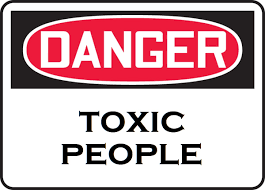
Hello Readers,
It’s hard to believe we’re at the close of November, heading into December – The Christmas Season. Where does the time go? Way too fast, that’s for sure. I was thinking about the pros and cons of the holiday season which triggered a subject that we all have to deal with, not only during the month of December, but all year long. That issue we call “Toxic People.” This season seems to bring them out of the woodwork more than any other time of the year. I guess when you take the hassle and stress of everyday life and then add the hustle and bustle of the holidays on top of it; you get very disgruntled and often malevolent people. You’ll find them everywhere – at home, at work, at the shopping mall, driving down the freeway, or at the grocery store.
How do we deal with these exhausted, exasperated, furious, and anxious human beings? Well, I came across an article that was very enlightening. It was written by Dr. Travis Bradberry, who is the award-winning co-author of the #1 bestselling book, Emotional. Intelligence 2.0. Here is some of the information from that article.
Toxic people defy logic. Some are blissfully unaware of the negative impact that they have on those around them, and others seem to derive satisfaction from creating chaos and pushing other people’s buttons. Either way, they create unnecessary complexity, strife, and worst of all stress.
Studies have long shown that stress can have a lasting, negative impact on the brain. Exposure to even a few days of stress compromises the effectiveness of neurons in the hippocampus—an important brain area responsible for reasoning and memory. Weeks of stress cause reversible damage to neuronal dendrites (the small “arms” that brain cells use to communicate with each other), and months of stress can permanently destroy neurons. Stress is a formidable threat to your life success—when stress gets out of control, your brain and your performance suffer.
You need to manage your emotions in times of stress in order to remain calm and in control. To deal with toxic people effectively, you need an approach that enables you to control what you can and eliminate what you can’t. The important thing to remember is that you are in control of far more than you realize. These are the things you need to master:
Set Limits (Especially with Complainers)
Complainers and negative people are bad news because they wallow in their problems and fail to focus on solutions. They want people to join their pity party so that they can feel better about themselves. People often feel pressure to listen to complainers because they don’t want to be seen as callous or rude, but there’s a fine line between lending a sympathetic ear and getting sucked into their negative emotional spiral. You can avoid this only by setting limits and distancing yourself when necessary. Think of it this way: if the complainer were smoking, would you sit there all afternoon inhaling the second-hand smoke? You’d distance yourself, and you should do the same with complainers. A great way to set limits is to ask complainers how they intend to fix the problem. They will either quiet down or redirect the conversation in a productive direction.
Don’t Die in the Fight
Victorious people know how important it is to live to fight another day, especially when your foe is a toxic individual. In conflict, unchecked emotion makes you dig your heels in and fight the kind of battle that can leave you severely damaged. When you read and respond to your emotions, you’re able to choose your battles wisely and only stand your ground when the time is right.
Rise Above
Toxic people drive you crazy because their behavior is so irrational. Make no mistake about it; their behavior truly goes against reason. Which begs the question, why do you allow yourself to respond to them emotionally and get sucked into the mix? The more irrational and off-base someone is, the easier it should be for you to remove yourself from their traps. Quit trying to beat them at their own game. Distance yourself from them emotionally and approach your interactions like they’re a science project (or you’re their shrink, if you prefer the analogy). You don’t need to respond to the emotional chaos—only the facts.
Stay Aware of Your Emotions
Maintaining an emotional distance requires awareness. You can’t stop someone from pushing your buttons if you don’t recognize when it’s happening. Sometimes you’ll find yourself in situations where you’ll need to regroup and choose the best way forward. This is fine and you shouldn’t be afraid to buy yourself some time to do so. Think of it this way—if a mentally unstable person approaches you on the street and tells you he’s John F. Kennedy, you’re unlikely to set him straight. When you find yourself with someone who is engaged in similarly derailed thinking, sometimes it’s best to just smile and nod. If you’re going to have to straighten them out, it’s better to give yourself some time to plan the best way to go about it.
Establish Boundaries
This is the area where most people tend to sell themselves short. They feel like because they work or live with someone, they have no way to control the chaos. This couldn’t be further from the truth. Once you’ve found your way to Rise Above a person, you’ll begin to find their behavior more predictable and easier to understand. This will equip you to think rationally about when and where you have to put up with them and when you don’t. For example, even if you work with someone closely on a project team, that doesn’t mean that you need to have the same level of one-on-one interaction with them that you have with other team members. You can establish a boundary, but you’ll have to do so consciously and proactively. If you let things happen naturally, you are bound to find yourself constantly embroiled in difficult conversations. If you set boundaries and decide when and where you’ll engage a difficult person, you can control much of the chaos. The only trick is to stick to your guns and keep boundaries in place when the person tries to encroach upon them, which they will.
Don’t Let Anyone Limit Your Joy
When your sense of pleasure and satisfaction are derived from the opinions of other people, you are no longer the master of your own happiness. When emotionally intelligent people feel good about something that they’ve done, they won’t let anyone’s opinions or snide remarks take that away from them. While it’s impossible to turn off your reactions to what others think of you, you don’t have to compare yourself to others, and you can always take people’s opinions with a grain of salt. That way, no matter what toxic people are thinking or doing, your self-worth comes from within. Regardless of what people think of you at any particular moment, one thing is certain—you’re never as good or bad as they say you are.
Don’t Focus on Problems—Only Solutions
Where you focus your attention determines your emotional state. When you fixate on the problems you’re facing, you create and prolong negative emotions and stress. When you focus on actions to better yourself and your circumstances, you create a sense of personal efficacy that produces positive emotions and reduces stress. When it comes to toxic people, fixating on how crazy and difficult they are gives them power over you. Quit thinking about how troubling your difficult person is, and focus instead on how you’re going to go about handling them. This makes you more effective by putting you in control, and it will reduce the amount of stress you experience when interacting with them.
Don’t Forget
Emotionally intelligent people are quick to forgive, but that doesn’t mean that they forget. Forgiveness requires letting go of what’s happened so that you can move on. It doesn’t mean you’ll give a wrongdoer another chance. Don’t be willing to be bogged down unnecessarily by others’ mistakes, so let them go quickly and be assertive in protecting yourself from future harm.
Squash Negative Self-Talk
Sometimes you absorb the negativity of other people. There’s nothing wrong with feeling bad about how someone is treating you, but your self-talk (the thoughts you have about your feelings) can either intensify the negativity or help you move past it. Negative self-talk is unrealistic, unnecessary, and self-defeating. It sends you into a downward emotional spiral that is difficult to pull out of. You should avoid negative self-talk at all costs.
Limit Your Caffeine Intake
Drinking caffeine triggers the release of adrenaline. Adrenaline is the source of the “fight-or-flight” response, a survival mechanism that forces you to stand up and fight or run for the hills when faced with a threat. The fight-or-flight mechanism sidesteps rational thinking in favor of a faster response. This is great when a bear is chasing you, but not so great when you’re surprised by an angry person.
Get Some Sleep
I can’t say enough about the importance of sleep to increasing your emotional intelligence and managing your stress levels. When you sleep, your brain literally recharges, shuffling through the day’s memories and storing or discarding them (which causes dreams), so that you wake up alert and clear-headed. Your self-control, attention, and memory are all reduced when you don’t get enough—or the right kind—of sleep. Sleep deprivation raises stress hormone levels on its own, even without a stressor present. A good night’s sleep makes you more positive, creative, and proactive in your approach to toxic people, giving you the perspective you need to deal effectively with them.
Use Your Support System
It’s tempting, yet entirely ineffective, to attempt tackling everything by yourself. To deal with toxic people, you need to recognize the weaknesses in your approach to them. This means tapping into your support system to gain perspective on a challenging person. Everyone has someone at work and/or at home who is on their team, rooting for them, and ready to help them get the best from a difficult situation. Identify these individuals in your life and make an effort to seek their insight and assistance when you need it. Something as simple as explaining the situation can lead to a new perspective. Most of the time, other people can see a solution that you can’t because they are not as emotionally invested in the situation.
Bring It All Together
Before you get this system to work brilliantly, you will find yourself tested by touchy interactions with problem people. Thankfully, the plasticity of the brain allows it to mold and change as you practice new behaviors, even when you fail. Implementing these healthy, stress-relieving techniques for dealing with difficult people will train your brain to handle stress more effectively and decrease the likelihood of ill effects.
So there you have it. Maybe by using some of these techniques we can keep the stress levels down and make it through the holidays and even our lives!
Have a great day and don’t forget to check out the information and books on my website. Reading is a terrific stress reliever and books make a wonderful gift!
If you have any helpful ideas, please let us all know. We can always use another stress reliever or way to deal with those toxic folks out there.
Solitaire
Stress Survival 101!

Relieving and managing stress is definitely a necessary survival skill, especially in this crazy fast-paced, technology driven world in which we live today. Authors stress about all sorts of things – whether readers will like our books, deadlines, writer’s block, book sales, the next new project, and a host of everyday things we call “life.” We all have this annoying affliction caused by work deadlines, an overabundance of traffic, countless family obligations, health problems, and who knows what else! Relaxation . . . That’s just crazy talk! So how is it possible to cram more time into a day when it’s packed full of “stuff” to do already? I don’t have the answer to that question, but there are experts out there in the cyber-world that seem to have some suggestions. Maybe it’s time we started listening to some of them before we become another stressed out statistic! (Stress is a major cause of heart attacks, high blood pressure, depression, anxiety, and the list goes on and on. Doesn’t sound good.) So see if any of these ideas might be helpful –
- Lower stress through your diet by making smart food choices that actually help your immune system to function properly rather than try to compensate for all the bad food we eat. Eating whole real food restores balance and reduces the effects of stress on your body. There is a connection between your stomach and your brain. Give your brain something healthy to work with.Release endorphins through exercise. Get your body moving and stop being so sedentary – dance, walk, do Yoga, Martial Arts, swimming, run up and down the stairs or whatever you like to do. Stand up and do some stretches if you can’t do anything else at the time. Our bodies were not designed to sit still for too long. Just get moving!!!
- Get a decent night’s sleep. Sleep and stress cause a vicious cycle. Lack of sleep makes it harder to handle the problems of the next day, which causes more stress. Allow your body to slow down right before bedtime – turn off the technology, as hard as that may be. Your body will thank you for it.
- Breathe. Yes, we do it all the time, but slow down your heart rate with slow deep breathing which will lower your blood pressure and allow you to calm down and relax. Never underestimate the power of just taking deep, slow breaths. Slow down that ragged life style for a little while.
- Have an attitude of being grateful for everything and everyone in your life. It has an amazing affect on your physical, psychological, and relational well-being. Increased positive emotions means greater stress tolerance, better relationships, improved overall health and better sleep. Create a daily habit of remembering what you are thankful for. There is too much negativity in this world already. Don’t add to it.
- Be realistic in your expectations of yourself and others. Don’t expect everything to go perfectly. People will never be perfect. Have healthy responses to conflicts at work and at home, and don’t be so hard on yourself. You can’t control what people are going to do or say, but you can control your reactions to it. Attempt to be the better person. It’s much less stressful when things don’t go as planned, and let’s face it, there are always surprises.
- Identify your priorities and establish boundaries. Consider what is the most important and put that as a priority. Say “no” to lesser priorities and if you need help, don’t be afraid to ask. You might need to set a specific time to exercise or spend quality time with a loved one, or to do something work related. This can keep you from feeling “pulled” in too many directions, or risk disappointment or resentment. Manage your time wisely.
- Take some “alone” time for yourself. It might only be 5 or 10 minutes, but go somewhere away from everyone and just relax and breathe. Walk outside and take in the beauty of nature, do some yoga, take a short rest and calm your mind, or listen to music. Go collect your thoughts and clear your head. Give yourself a break.
- Organize your life. Clean up your desk, or your house. Living in a cluttered world makes your mind cluttered as well. Keep things where they belong so you can find them again. It makes your life less stressful if you don’t have to hunt for something that you need at the time. Organize and unclutter your world. Your brain will thank you for it!
- Socialize and have fun. Laughter is great for your health. Visit with friends, or play Frisbee with your dog, play with your children at their level, watch funny videos on Youtube, or plan a vacation. Take a break from whatever is stressing you out and do something that’s fun. Too much work is not good for you physically or mentally.
So take some time to de-stress and have a great day!
Solitaire




 Solitaire Parke - Sci-Fi/Fantasy Books
