Blog Archives
“Egg of the Amphitere” Book Three in the Dragomeir Series is here!

Tanis, Queen Mother and the Dragons are continuing to fight for their mountain home against the Dark Lord and his hordes from the Provinces. There are unexpected revelations at every turn, bringing excitement, danger, and possible death to the dragon riders of Mt. Drago. With the help of their friends and some strategic maneuvering, they are determined to win the ongoing battle, but at what cost? Who will be left standing?
Book Three of the Dragomeir Series,
“Egg of the Amphitere”
is now available at the following locations –
Check out the other books in this series at my website or in this blog under Books.
Solitaire
Why are Headlines Important to You?
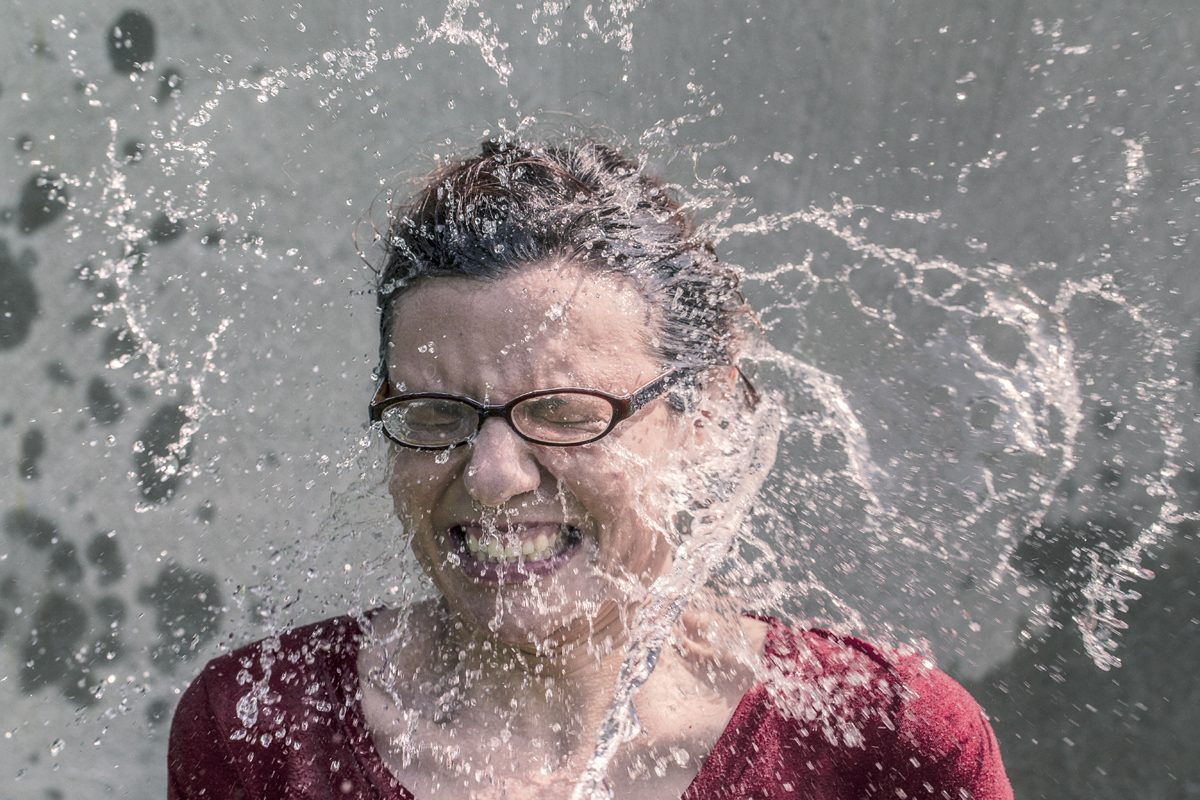
Reaching customers in a deep and emotional way is a key to successful writing. Your headline is probably the most important draw you can use to reach potential readers whether it is your newletter, blog, email or any piece of copywriting. Of course it’s important that your content is amazing, but no one is going to read it if the headline falls flat. The majority of people use headlines to decide whether or not to read your content. So here are 8 locations where you can find helpful information on this important topic.
- Emotional Marketing Value Headline Analyzer from Advanced Marketing Institute – Education and Research http://aminstitute.com/headline/
- http://writtent.com/blog/17-words-must-use-headlines-examples/
- http://www.copyblogger.com/how-to-write-headlines-that-work/
- http://blog.hubspot.com/marketing/a-simple-formula-for-writing-kick-ass-titles-ht
- http://goinswriter.com/catchy-headlines/
- http://www.wordstream.com/blog/ws/2014/07/17/headline-writing
- https://www.quicksprout.com/the-definitive-guide-to-copywriting-chapter-3/
- http://www.verticalresponse.com/blog/writing-headlines-that-grab-attention/
If you’ve found any other sites that would be helpful to writers, please share!
Have a great day!
Solitaire
Creature Feature – The Savants
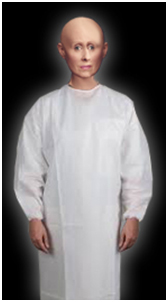
In the Dragomeir Series Book Three, “Egg of the Amphitere”, some of the more unusual visitors to Mt. Drago were the Savants. They entered Mt. Arcadia first, and impressed with three of the Amphitere Dragons, after having just appeared in the common area. Within minutes they disappeared and went to Mt. Drago to present information to Queen Mother. It was not received well.
The Savants were an ancient race of diminutive people that hailed from Oblivion. Standing only four feet tall and incredibly frail, they had managed to impress with the most violent of the species of dragons, the Amphiteres. The people of Mt. Drago only saw three of this race, all female, although Tanis had a difficult time determining their sex until an introduction was made.
All three of them wore floor length white smocks, were bald, and only spoke by writing their messages on a series of Post it Notes.
Seemingly able to move through both time and space, these unusual females quickly angered Queen Mother into a bold show of power to establish who was in control . . . and who was not.
The leader of the Savants called herself Caesarea Maritima (Also a city in Israel), and although very old, had the body of a child. The other Savants looked identical to Caesarea making it difficult to tell them apart. Their existence in our world was made possible due to the Hearths they controlled, and an underlying hatred for the Dark Lord.
The Savants can be found in my forthcoming book, “Egg of the Amphitere.”
Visit me to find out more at – www.solitaireparke.com
Solitaire
SECRETS IN THE DESERT
SECRETS IN THE DESERT
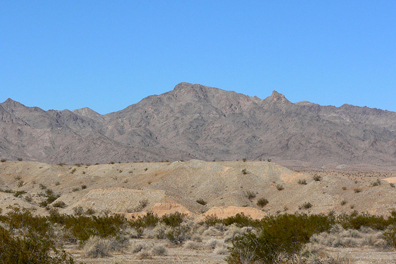
Mount Manchester is the highest peak in the Dead Mountains of extreme northeastern San Bernardino County, California in the Mojave Desert. The Dead Mountains are 12 miles northwest of Needles, California. It is the highest point at 3,598 feet. The Dead Mountains border the Colorado River on the east, and the Piute Wash of the Piute Valley on the west. Piute wash drains south, then turns east for 8 miles at the south of the range to meet the Colorado River.
Tanis, the lead character of the book,”Egg of the Amphitere,” is shocked to find a massive artifact depot deep inside the Mojave Desert. He is even more shocked to discover he has inherited its contents. A secret kept from him since he became a Thaumaturgist/Machinist, Tanis is overwhelmed by the vastness of the icons and technology held within its walls.
Once there, he determines the artifact depot is under Mt. Manchester, accessible only from the Thaumaturgists headquarters located in Phoenix Arizona.
The technology found within its caverns becomes instrumental not only to Tanis, but to the inhabitants of Mt. Drago as they struggle to keep the Dark Lord at bay.
I’ve always looked at the artifact depot as a combination of Warehouse 13, and the alternate dimensional library of ancient antiquities.
To uncover the secrets hidden in the mountain you’ll need to check out my forthcoming book,
“Egg of the Amphitere” which will be available in November. To purchase the previous
Dragomeir Series books,
“The Emerald Dragon” and
“Flight of the Aguiva”
go to my website and you will find them at a variety of places –
Solitaire
Where is Caesarea Maritima?
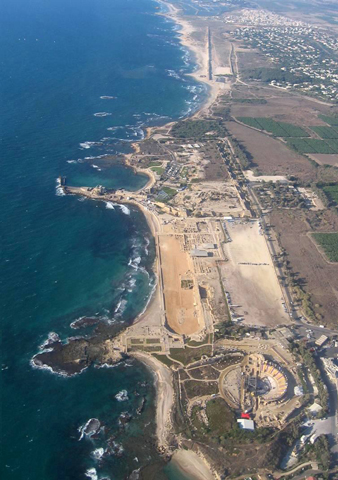
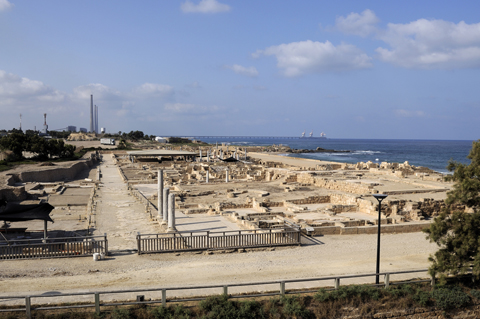
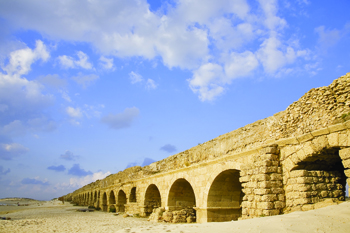
In my forthcoming book of the Dragomeir Series, “ Egg of the Amphitere,” one of the key points is the location known as Caesarea Maritima. It was one of four Roman colonies for veterans in the Syria-Phoenicia region created by the Roman Empire. The ancient Caesarea Maritima city and harbor was built by Herod the Great about 25–13 B.C. It was named in honor of Caesar Augustus.
Caesarea was built like a model Greco-Roman city and laid out on a grid. There was a forum, theatre, temples, public baths, paved streets, and an elaborate villa that probably belonged to Herod himself. Giant twin aqueducts brought fresh water from Mt. Carmel, and formed part of an elaborate water and sewer system. But the focal point was a temple dedicated to Augustus.
Caesarea’s strategic location placed it at the juncture of important trade routes. In the harbor, Herod’s engineers constructed two huge breakwaters, lined with warehouses. At the end of the southern breakwater stood the lighthouse, whose fires burned 24 hours a day. Six enormous bronze statues marked treacherous sandbars. To ships coming in from sea, the sight must have been truly impressive. The city had been populated through the late Roman and Byzantine era. Its ruins lie on the Mediterrean coast of Israel, about halfway between the cities of Tel Aviv and Haifa, on the site of Pyrgos Stratonos (“Straton’s Tower”).
A hearth is discovered there and plays an important role in the near destruction of Mt. Drago, the mountain around which my story is based. (In general in ancient Greece, each state, city or village possessed its own central hearth and sacred fire, representing the unity and vitality of the community. The fire was kept alight continuously, tended by the king or members of his family.)
Tanis finds not only a hearth in the ruins, but also the remains of one of the original prytaneums. (A prytaneum was a public building or hall in an ancient Greek city containing the state hearth and serving as the place of meeting and dining for the prytanes or priests, and sometimes of official hospitality for distinguished citizens and visitors.) Further study shows him the convergence of multiple Ley Lines and a portal to Oblivion.
I chose the hearth at Caesarea Maritima because similar structures also show up in other parts of the world where Ley Lines are present. What better way for the book’s characters to travel on and off the Provinces?
In the real world, Caesarea Maritima is open to the public and is certainly one of the oldest settlements, dating back over two thousand years.
Want to find out more? Check it out here: https://en.wikipedia.org/wiki/Caesarea_Maritima
Solitaire
Forthcoming Dragomeir Series Book 3 – “Egg of the Amphitere”
The Forthcoming book, “Egg of the Amphitere“, is the third installment to the Dragomeir Series. The manuscript is finished and in the final editing stages, which is always very exciting and nerve-wracking at the same time. In this book, Queen Mother manages to procure the third and final Crystal Key, which will keep the hordes from Hell locked on the Provinces forever. Tanis impresses with an Amphitere dragon and increases his family to four. You are introduced to a new group of people called the Savants at the mountain, and Tanis learns of a Gate system called the Hearths. This system could end the isolation of the Dark Lord and bring destruction to Mt. Drago. So Tanis and Queen Mother must find out how the Dark Lord plans to use these devices, and stop him before their world crashes down around them.
Find out if the Savants are friends or foes, and if the Hearths are the wave of the future or the end of mankind. Learn how the Amphiteres are the answer to the dragons’ past, and what they must do to survive.
“Egg of the Amphitere” finishes the original saga of Tanis Theatra and his quest to become a dragon rider, but there are many more stories yet untold. So keep following as the big picture unfolds.
See you soon . . .
Solitaire
Where Do Book Characters & Their Names Come From?

I’ve been asked many times how I get the characters that appear in my books. Funny, I’ve always been shy in the admission of their history because many of the characters that show up are people that I know, or am related to in some manner. I’ve always worried what some of the people would say if they knew, consequently, it isn’t generally the first thing I’d choose to reveal. Most people don’t see themselves as others do, and in that knowledge rests my courage to portray them as I see them – good, bad or indifferent. This is not a strict rule of thumb though, as there are exceptions – you will see as you continue to read.
The easy ones to use as examples are the characters that have enviable personas, like Princess Rhylana. She was patterned after my wife and mother to my children. In the book, Rhylana portrays the very essence of what I see in her, and have seen for years. She’s spunky, aggressive, and kind to small children and animals. She’s a fighter, and never gives up.
Queen Mother was given her persona from a very dear lady to me, and companion. She’s aggressive, prone to lead anyone who’ll follow, (you know just to keep them safe) and dedicates her life to promoting the underdog. She’d spit in the eye of a demon, but runs from cockroaches and can’t keep herself from rescuing any and all small mammals.
Tanis, a lead character and spokesman for a series of my books was patterned after me.
Two exceptions are characters that were designed by readers. They signed up for a character contest to have their creations entered into volume one of my Dragomeir Series, “The Emerald Dragon.” Helup Ironfold, a Blacksmith by trade and rider to the dragon Jilocasin Sybaris Cirfis, was created by Jacob Overton and played a significant role in the book. He appears in later books as well. Sergei Rasputin Cosmonov, a Red Immortal Demon and rider to the dragon Volansa Spirandi Bellator, was created by Joe Russomanno and also played a significant role in the book. Sergei too, has a role reprisal in later books.
When it comes to naming my characters, there are a few things that come to mind.
- Some of the names are compilations of people I know or maybe even names of pets. A particular character may bring someone to mind because of their personality or specific traits.
- I Google English names or words to determine what they would be in another language. It’s wise to check origins of names to make sure you have the correct one for the location of your setting.
- Checking the “root” meaning of a name might be important too. It needs to apply to your character to make sense, unless it’s done purposely for comedy or irony.
- Google is a great resource for almost everything. Once a name is picked, I often Google it to make sure it isn’t a real person who might be offended by the usage of their name. If there is a question, then I change it somehow.
- I might use a name from a book I have read or a movie that I particularly liked because it fits the character I have created in some way. I’m careful not to plagiarize someone else’s characters.
- I don’t always use a middle name or initial, depending on the character. It isn’t always necessary unless you need a specific emphasis on a name.
- It’s also good to choose names that fit the era you are writing about, unless an unusual name for that time frame is part of the story.
- I have even used names that I liked from a certain place or map that just sounded right for my character.
How do you name the characters in your stories? It would be fun to know.
Solitaire
Visit me at solitaireparke.com
7 Tips and Tricks on How to Keep Your Dragon Happy!
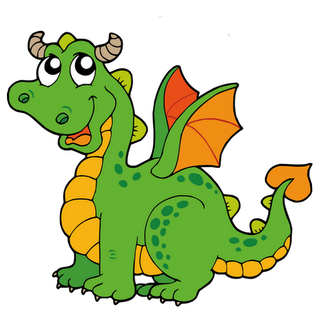 Since I am currently writing a series of books which are centered on Dragons, I thought it might be interesting to find out (from the Dragon Rider’s perspective) what makes them behave and keeps them happy.
The Dragomeir Series – Urban Fantasy
And the Forthcoming book
My main character, Tanis Theatra, has not only one, but three Dragons to manage on a daily basis. So, how do you deal with creatures that are potentially dangerous, if nothing else, because of their size (Enormous would be an understatement) and then there’s that little thing about breathing fire/plasma, or just getting in the way if their mood isn’t so great and they’re just hungry. How do you pacify or keep a Dragon in a good humor? Well, according to Tanis, here are some tips –
- The only thing to fear is fear itself. Just keep telling yourself that, two and a half tons isn’t all that big. Dragons have an uncanny sixth sense about where you are at all times. You’ll probably trip over their tail long before they step on you.
- Fire can be a problem during impression, but except for rare occasions, it’s mostly a matter of symbolism. Baby Aguivas on the other hand will teach you from experience not to stand at either end. Accidents only happen to the unwary.
- Amphiteres are born angry, so consequently get up on the wrong side of the grotto every day. They want to play, and it’s a thin ploy that lets them act out their frustrations, so play with them a lot. It helps in so many ways.
- A dragon will get grumpy if they’re not fed enough, but the same result happens when they’re fed too much. Either way brings out the pent up hostility in a reptile. Once every four days is a general rule of thumb, but understand, too much is worse. Dragons grow throughout their lives and the rider is the last word on how much they eat and grow.
- In a Dragon’s “Holder of Things”, a container much like a metal trash can, you can often find one of their favorite toys – a Frisbee – which makes them very happy. They can be extremely child-like in many ways.
- One of a Dragon’s favorite things is cherry candy and they will do pretty much whatever you want to get it.
- Dragons hear your thoughts and mirror your emotions. The more stable you become, the happier your dragon will be. It’s a good recipe for both parties when the rider is on his/her game.
So, now you’ve learned a few interesting facts about the Dragons of Dragomeir. They’re really quite compelling, although they can be very formidable if you make them angry. But to a Dragon Rider there is no greater creature in the universe!
Join Tanis and his friends as they uncover fascinating relationships, deceptions, betrayals, mysterious technology, and old-world charm and of course – Dragons!
Solitaire
In what Point of View do you write?

When writing a novel there’s a universal question that most writers grapple with – how do you choose which Point of View to use? Point of view is the way the author allows you to “see” and “hear” what’s going on. There are several different points of view available to you and each one has several pros and cons. You must consider how the point of view you choose will impact the story you are trying to tell.
FIRST PERSON POV: When you tell a story through a viewpoint character using I or we. First person POV refers to the I, we, me, my, mine, us narrator, and is often the voice of the heroic character or a constant companion of the heroic character. Every detail of your story must be filtered through the storyteller. It is usually your main character. If your main character cannot see, hear, touch, smell, taste, think, know or feel it, you can’t include it. So, if you want to introduce something outside the range of your main character, you must use the words or observed actions of some other character who is in a position to see or know the events in order to convey the information you want the reader to have. Remember that the POV character cannot know the thoughts or unspoken feelings of another character.
Advantages –
- It’s Easier to feel empathy for the character since you are spending so much time in their brain
- It can give logic and motivations to characters that would seem otherwise evil, immoral, or otherwise not relatable.
- It more easily fleshes a character on the page by allowing the audience to listen to their voice for long periods of time.
Disadvantages –
- You are limited to writing about what the narrator can see or sense.
- The narrator must constantly be on stage or observing the stage.
- You can’t go into the minds of other characters.
SECOND PERSON POV: Where the author uses you and your – it is rare. Authors seldom speak directly to the reader. When you encounter this point of view you should pay attention. The author has made a daring choice, probably with a specific purpose in mind. Most times, second person point of view draws the reader into the story, almost making the reader a participant in the action.
Advantages –
- The reader can feel more intimately connected and involved with the story.
- It gives you the power to be different, even eccentric in the way you can speak to the reader so directly.
- It gives life to the characters in a way that other viewpoints don’t.
Disadvantages –
- It begins to feel quirky, whether you’re reading it or writing it.
- Novels solely written in second person make it more of a possibility that the reader may feel disconnected from the story.
THIRD PERSON POV: The he, she, it, they, them narrator, third person is the most common POV in fiction. It offers a variety of possibilities for limiting omniscience: information that the narrator and reader are privy to in the telling of the story.
Advantages –
- In omniscient mode, the narrator is all knowing and can move to anywhere in the story world.
- The narrator can also tell the reader things the main character doesn’t know, creating dramatic irony.
- Provides a broad perspective on the story, which is useful for epics involving many plotlines.
Disadvantages –
- Far less intimacy between reader and main character. The reader feels as though he is looking at characters rather than being a character.
- Narrator is reliable (this could also be seen as a pro).
- You can confuse yourself and the reader unless every voice is distinctive.
My urban fantasy books from The Dragomeir Series were written in first person. They are all from the main character Tanis’s point of view. Not knowing any more than Tanis did from moment to moment was used as a means by which to increase the potential bond between him and the reader. The reader goes where Tanis goes, sees what he sees, and has to catch up on events when he returns to a person or place. I wanted the reader to use Tanis’s ability to understand people and to figure out friend or foe, good and bad, but to ultimately do it together. I felt the books needed to be a more personal, casual account of what was happening to have a better shot at complete immersion with the story as it unfolds. I hope you enjoy reading the Dragomeir Series as much as I did writing it.
THE DRAGOMEIR SERIES –
- “The Emerald Dragon”
- “Flight of the Aguiva”
- And coming soon – “Egg of the Amphitere”
Solitaire . . .
What Point of View do you use and why?
Top 10 Fantasy Writing Tips From “Game Of Thrones” Author George R.R. Martin!

Just about everyone, including me, has watched or at least heard of the TV show, “Game of Thrones.” The author, George R. R. Martin, has been writing Fantasy books for many years before this series came out. I have been a fan of his for a long time. Since I write Urban Fantasy myself, I was curious what his thoughts were on the subject. So I thought this article on the site, Lifehacker.com, was rather interesting. His top 10 writing tips for Fantasy are as follows:
- Don’t limit your imagination
- Choose your point-of-view characters to broaden the narrative’s scope
- It’s okay to borrow from history
- Talk to real people for a believable point of view
- Grief is a powerful tool_but don’t overdo it
- Violence should have consequences _ so spare nothing
- Avoid fantasy clichés
- The world is full of “grey” characters to draw from
- Juggling lots of characters takes skill and luck
- All men must die, but we don’t have to give way to despair
To read the details of each of these tips, click on the link below and enjoy!
Any tips you’d like to share? I’m always open to new ideas for improving my writing. See you soon.
Solitaire


 Solitaire Parke - Sci-Fi/Fantasy Books