Blog Archives
Your Most Creative Year Yet – 2026
Why Art, Movies, and Mingling with the Marvelously Different Will Change Your Life (And Maybe Your Wardrobe)
Welcoming 2026: A Creative Call to Adventure
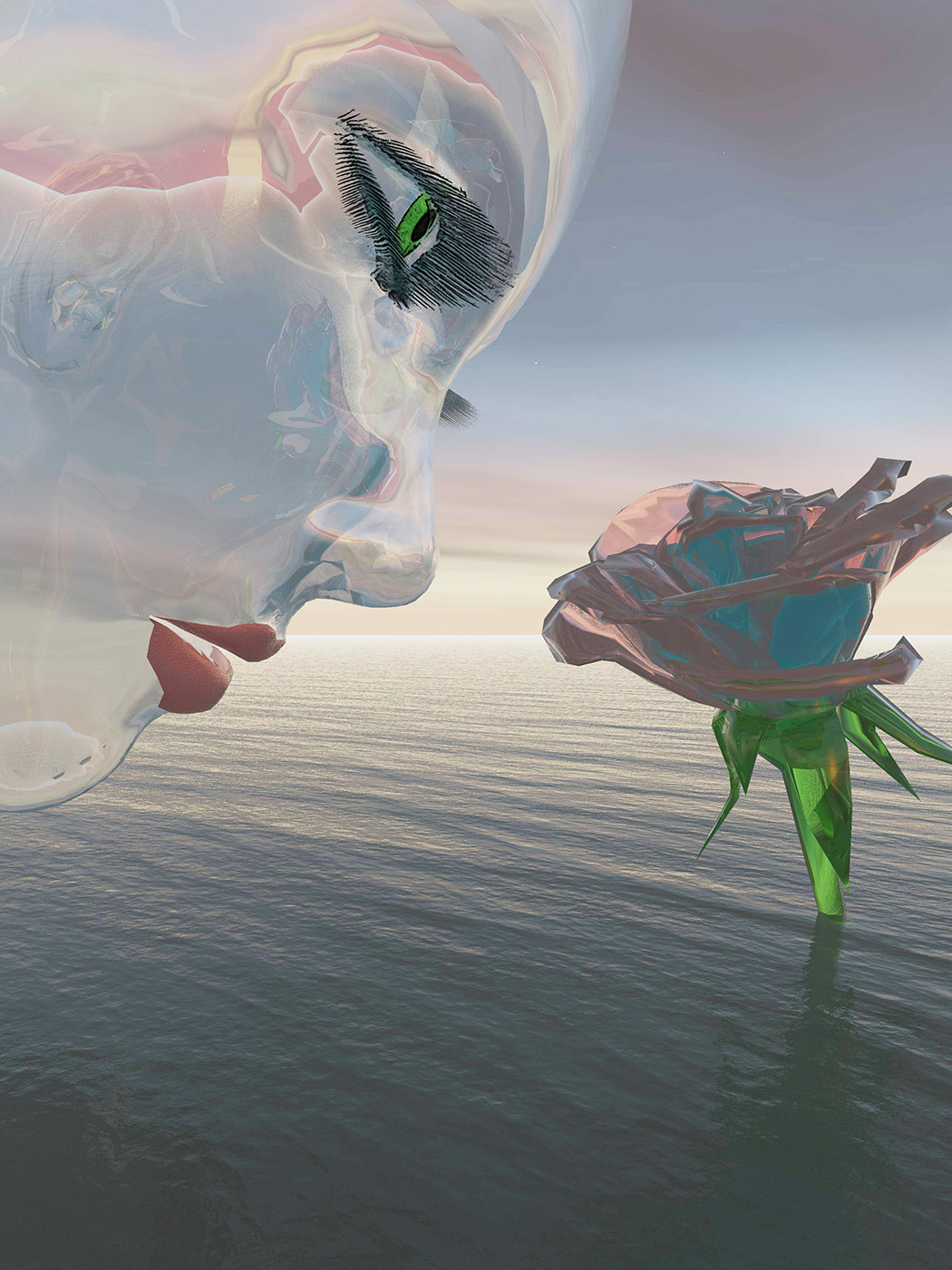
Greetings, fellow travelers in the grand gallery of life! As the curtains rise on 2026 it’s time to consider an idea that’s neither about kale nor exercise. Let’s make 2026 the year we all say “Yes!” to more art, more creativity, and maybe even a few movies or musical numbers in our homes.
Why Art Matters: Everyday Enrichment, Zero Calories
Let’s be honest: life can sometimes feel like a never-ending loop of emails, to-do lists, and the dismay that comes with discovering an old moldy dinner that ends up in the Insinkerator. Enter art! Whether it’s a splash of beautiful colors on a canvas, an amazing digital creation from the mind of an inventive computer geek, a simple doodle in a notebook, or that interpretive dance you do when nobody’s watching, art infuses our days with wonder, pleasure, and a dash of quirkiness. Creative experiences don’t just make our Instagram feeds appealing, they give life meaning, promote problem-solving, and make us feel more alive. Plus, unlike caffeine, art won’t keep you up at night (unless you’re a musician playing at a venue or you can’t turn your creative juices off – both of which have happened to me).
The Magic of Movies: Taking a Break from the Ordinary
Now, let’s talk about movies, the ultimate time machines, empathy engines, and providers of popcorn-related joy. Some of my favorites lately are movies that star the actor, Rutger Hauer – Blade Runner from 1982, The Hitcher, Ladyhawke, Surviving the Game. Watching a great film is like taking a mini vacation without the hassle of airport security. Movies invite us to inhabit other worlds, see through someone else’s eyes, and occasionally question why everyone in action scenes never seems to need the bathroom. More than entertainment, cinema is an art form that can spark inspiration, offer comfort, and encourage us to rethink our routines. The right film at the right moment can nudge us toward new dreams, or at the very least, inspire us to try slow-motion walks in dramatic lighting.
Lifestyles: Growing by Embracing the Wonderfully Weird
If you really want to supercharge your personal growth, try stepping beyond your comfort zone and engaging with people living lives wildly different from your own. Befriend a local avant-gard café or someone from your yoga class. Chat with the improv comedian at your local comedy club or finally accept your neighbor’s invitation to their “Experimental Cuisine Night” (just… keep an open mind about the beet lasagna). Surrounding ourselves with diverse perspectives and lifestyles not only expands our worldview but also helps us challenge our assumptions. It’s like updating the software of your soul – suddenly you’re running new programs and seeing life’s possibilities in high definition or perhaps an update.
Practical Tips: Adding More Art to Your 2026
- Visit a local museum or gallery: Bonus points if you bring a sketchbook or try describing everything in rhyming couplets afterward (poetry is harder than it looks)
- Host a movie night (theme hats encouraged): Pick films from different countries or genres and discuss them afterwards with friends (or your very patient dog).
- Try a new art form: Pottery, collage, interpretive shadow puppetry (is that a thing?), the world is your creative oyster.
- Say “yes” to invitations outside your comfort zone: Attend a poetry or writer’s group, join a dance class, or volunteer for a community mural project.
- Make time for daily creativity: Even five minutes of doodling, journaling, playing your guitar or keyboard, or humming tunes while you take a work break can do wonders for your mood and mind. Listen to background music while you paint or write.
Incorporate Creativity—Make Life Your Masterpiece
As 2026 unfolds, let’s make a pact to welcome more art, more movies, and more beautifully diverse experiences into our lives. Not just because it looks good on social media, but because creativity makes every day richer, more surprising, and more meaningful. We all have the capacity to be creators, explorers, and admirers of the eccentric and profound. So, dust off your imagination, take time off and watch a movie you’ve been meaning to see, grab a ticket to the next concert in town, and don’t be afraid to try beet lasagna. Here’s to a year of vivid colors, a bold outlook on life, and unforgettable stories – on the screen, on the canvas. Make your life extraordinary!
Solitaire
Click Here for Art by Solitaire
Exploring the Beauty of Poetry

THE TREES
My ears detect the sigh of trees.
The smell of salt from the ocean breeze
That touches sweat upon my brow,
And brings my thoughts to here and now.
The leaves have sung a sweet refrain,
Of spoken love and conquered pain,
That only comes to those who dream,
Though never knowing what it means.
The branches filter out the sun
And cool the day until it’s done.
But dropping garments on the ground,
They float and fall without a sound.
Profuse they stretch to meet the sky
And touch the clouds that chance sends by.
Living in a plaintive maze
While watching nature through her days.
A solitary vigil here
That cloaks the world throughout the year.
A living carpet that forever stands,
In every heart…In every land.
Poetry is a type of creative writing found in cultures around the world. It is a type of literature or artistic writing that attempts to stir a reader’s imagination or emotions. The poet does this by carefully choosing and arranging language for its meaning, sound, and rhythm. The author is attempting to communicate a message through the piece, and it can be a powerful teaching tool. It is a unique and captivating form of literary art that evokes human emotions and is often interpreted differently by each reader. Poetry, more than any other form of writing, allows the author to convey their ideas and feelings and communicate those expressions to others in a way that may be encouraging or thought provoking.
Poems can be structured, with rhyming lines and meter, the rhythm and emphasis of a line based on syllabic beats. Poems can also be free-form, which follows no formal structure. You can read all about the different forms of poetry here –
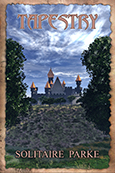
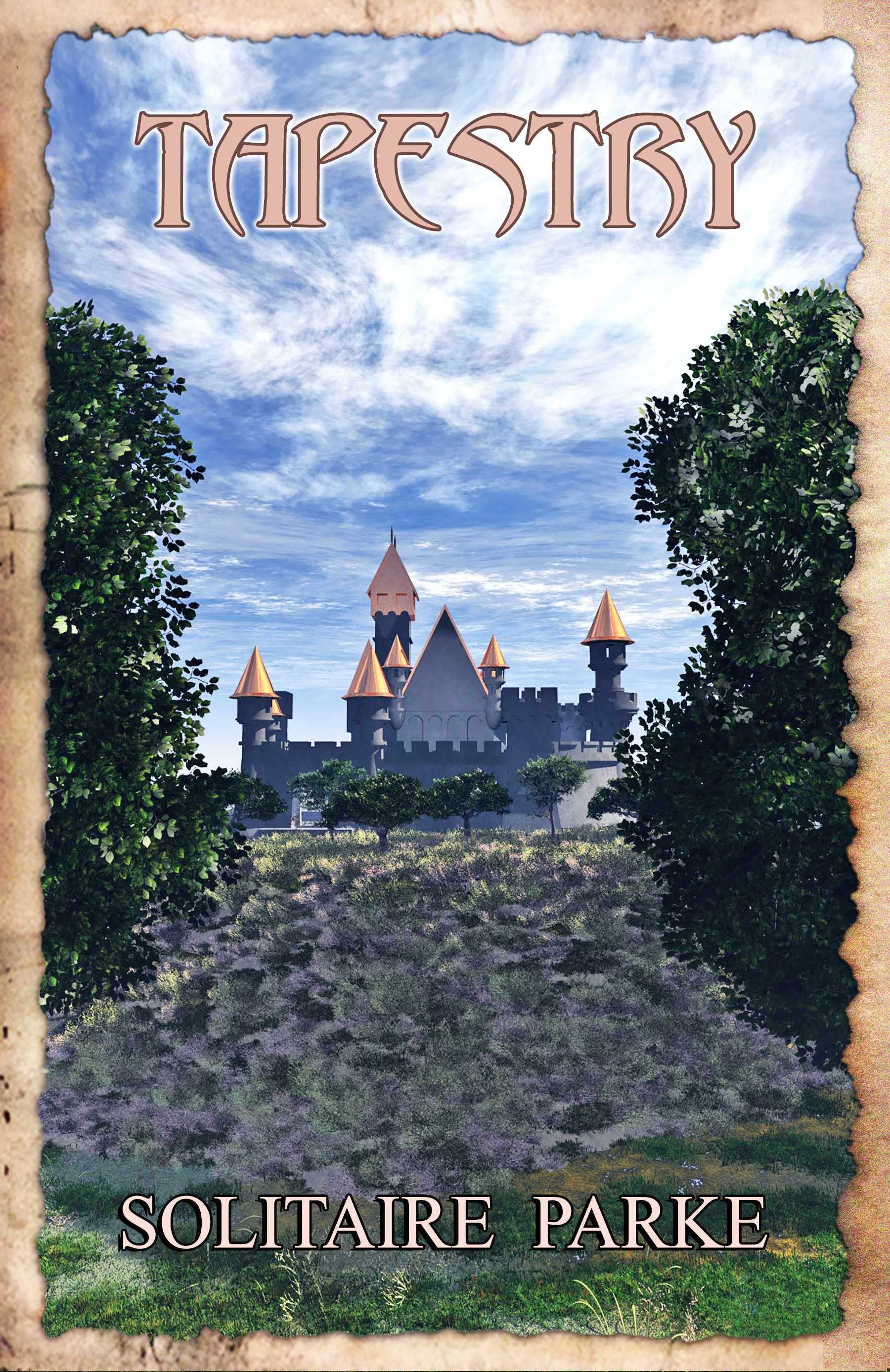
My book of poetry is called TAPESTRY, and can be found on my website here –
Review –
“There is as much beauty and wonder inside this book as there is on the cover.
I don’t profess to know a lot about poetry. I just know I like to read it.
It moves me the way a wonderful painting or other piece of art does.
I don’t have to understand it, I just have to feel it.
Tapestry moved me in many ways. It still does.
I keep it on my ottoman and when I’m not busy, I sit quietly and open the book to a random page and lose myself.”
I hope you will take the time to enjoy some poetry now and then. It is food for the mind and soul.
Solitaire
Top Ways to Enjoy October’s National Book Month
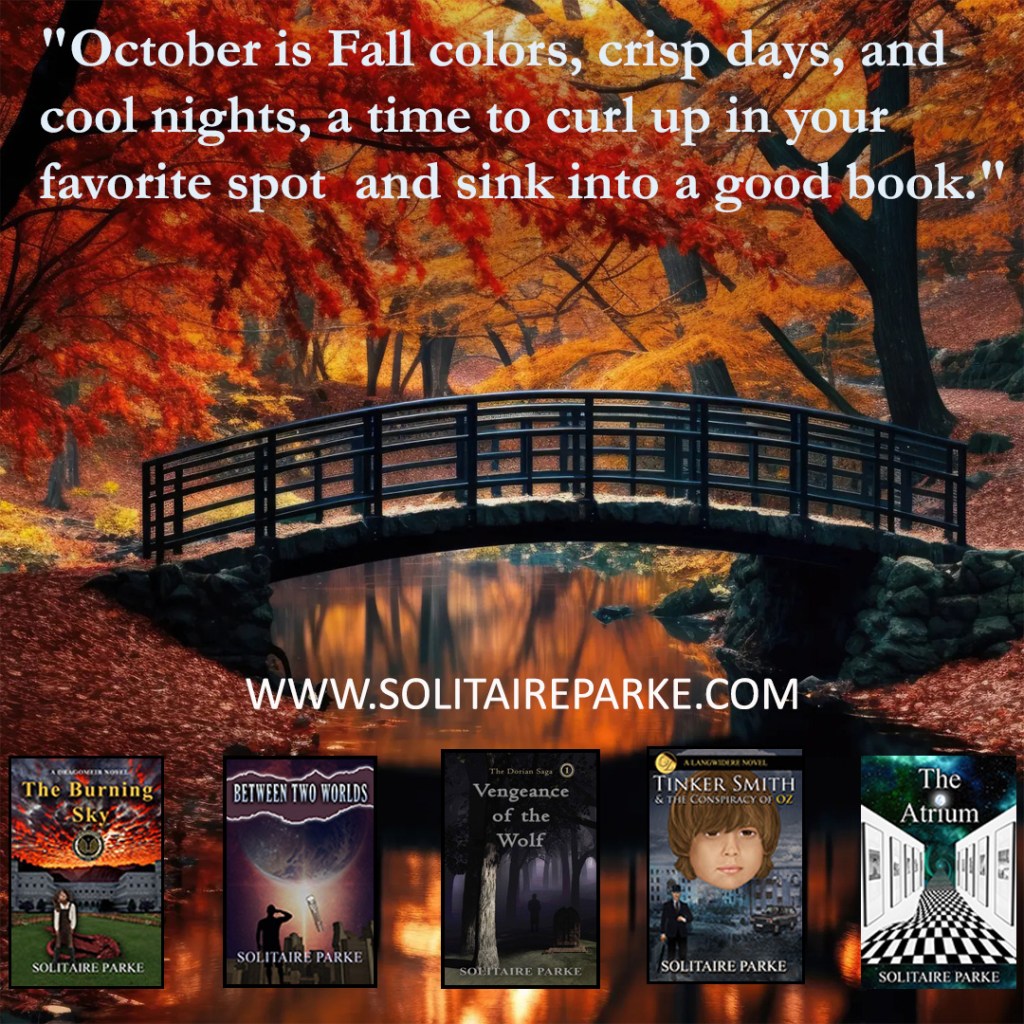
October is National Book Month, an observance that celebrates the importance of reading, writing, and literature in the United States. It is sponsored by the National Book Foundation. This initiative encourages people to develop a love of reading by making it a regular part of their day, visiting libraries and bookstores, and sharing their experiences on social media.
Celebrate by visiting your local libraries or bookstores
Share your reading experiences and post about books you love on social media and websites
Make your reading time special by setting up a cozy reading nook in your home
Create a new routine and read out loud to your children
Follow your favorite authors and stay up on their new works
Step out of your comfort zone and explore books in new genres
Give the gift of a book to friends and family
Set up a reading routine or book club with a friend or friends
Take your book to a coffee shop and enjoy a different location and a good cup of coffee
Check out events at your local library or support an independent bookstore in your area
Put up a little “Free Library” in your area. There are many oversized mailboxes filled with books popping up in neighborhoods all around the world. Share with others.
Start writing your own book. Everybody has a story to tell. It may sound daunting, but every great book started with an author sitting across from a blank page. Whether you journal every day or only write text messages, use this month to begin writing the story you want to tell. You never know who needs to hear what you have to say!
Celebrate the power of reading and writing!!!
Solitaire
Best Websites to Boost Your Writing Journey

Listed below are some tools that can be very useful for new writers. This is not by any means a complete list of everything available, but they do contain some of the best information that I’ve found. If you can learn something that will enhance your work or add to your knowledge base, these sites will definitely be worth your time to explore.
The Creative Penn – Home of author Joanna Penn. An award-winning, New York Times and USA Today bestselling author with more than 40 books across multiple genres, who shares lessons learned on how to write, publish and market your book, and make a living with your writing.
Helping Writers Become Authors – K.M. Weiland, the award-winning and internationally published author of acclaimed writing guides, such as Structuring Your Novel and Creating Character Arcs.
Jane Friedman – For almost 3 decades, Jane has been working with writers and publishers, giving informed and insightful guidance to those in the writing field.
Nathan Bransford – An author, editor, and former literary agent, helping authors with writing and publishing advice for a successful writing career.
The Book Designer – Everything you need to know about book design, production, and publishing success. Endless helpful articles to teach and inspire the writer.
Dave Chesson – Kindleprenour – Great information on writing, publishing, and marketing, including helpful programs.
Your Writer Platform – Simplifying the process of writing – resources for authors.
Writers Helping Writers – Lists of resources, tools, worksheets and more for writers.
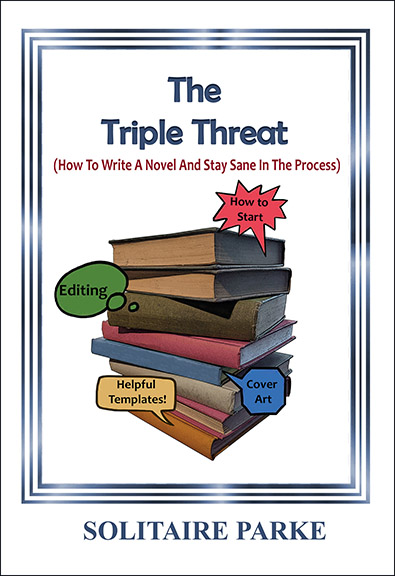
I hope these websites will assist you and clarify the information needed to make your writing career a successful one. Here’s one more book that may help if you’ve always wanted to write a novel but have no idea where to start. I’ve made my fair share of mistakes, and hopefully I can keep you from making some of the same ones. I will guide you through the process from the beginning to having a finished book you can be proud of. If your dream has been to become a published author, maybe The Triple Threat will help you to that end.
Click Here: The Triple Threat (How to Write a Novel and Stay Sane in the Process)
Happy Writing!
Solitaire
Poetry – Food for the Brain!
The variety of poetry out now is huge. But what is the point? Maybe you like poetry that rhymes, or just something that causes you to feel things that take you away from the daily grind and think deep thoughts. Put simply, poetry is a type of literature, or artistic writing, that attempts to stir a reader’s imagination or emotions. Language is arranged by the poet carefully for its meaning, sound, and rhythm.
But why is it good for your brain?
- Like listening to music, poetry triggers an emotional response. MRIs have shown that certain regions in the brain’s right hemisphere light up and are activated, linking reward and emotion.
- Poetry isn’t just about reading words, but it’s also about understanding the sounds, meanings, and emotions of them. When the brain connects all these things at one time, its function peaks and strengthens your overall mental health.
- Encouraging self-reflection and boosting memory is another reason poetry is beneficial. Studies have shown that MRIs display that poetry causes the part of the brain that activates during daydreaming to light up. The reader often re-reads and even memorizes the words. It can help improve a person’s memory making it more receptive to retention of other information as well.
Poetry is everywhere. So how do you get more poetry into your life?
Listen to music
Read greeting cards
Poetry Books (reading them out loud gives you extra brain engagement)
Many calendars have poems for each day
You might try writing your own poetry – just feel and write the words
Each time you read or listen to poetry it’s beneficial to your brain. It provides pleasure, offers wisdom, provides emotional expression, and can be a form of remembrance, consolation, and healing. In any case, you activate brain function, and your overall mental health will thank you!
Solitaire
Surviving the Scorching Summer Heat


Scorching summer heat is currently giving us record-breaking temperatures and intense heat waves across the globe. In Arizona we could probably cook on the sidewalks, as crazy as that sounds! Outdoor barbecue has taken on a whole new meaning! The kids are staying out of the sun in the middle of the day and limiting their outdoor activities to the mornings or late afternoons and evenings when the sun isn’t so intense or has disappeared beyond the horizon. Even my dogs don’t want to be outside for long.
As an author and digital artist, I am perfectly happy to be inside my office where I can be comfortable in the air conditioning with my ceiling fan whirring over my head to keep me cool. That’s the most productive atmosphere for me, and my favorite setting. If I want to see the outdoors I can just look out of the window next to my desk and pull back the curtains to let in the light, without having to deal with the heat.
If you work from home, adjust writing routines when necessary, by working during cooler parts of the day, such as early mornings or evenings. Setting realistic goals and focusing on specific tasks like editing or mind mapping during peak heat hours can also be helpful. Writers may need to be especially mindful of channeling and shaping emotions in their work, recognizing the potential for heightened emotional responses during heatwaves. You can also try working from libraries or cafes to make your day more interesting.
Some writers find that the summer heat actually sparks their creativity. Ernest Hemingway embraced writing in the summer heat and his style flourished during these periods. He spent significant time in hot locations like Madrid, Spain and Key West, Florida.
If you’re in one of those excessively hot areas of the world, be kind to yourself and stay hydrated, comfortable, and safe from the effects of the hot sun. Many children are now heading back to school, which will keep them busy for a good part of the day. Stay indoors when you can and protect yourself if you do go outside with sunscreen, a hat or umbrella and wear loose, light clothing that will allow you to stay cool.
Being indoors gives us all a great opportunity to explore our world and other worlds through writing and reading!
Have a great summer!
Solitaire
You won’t want to miss Smashwords 2025 Summer/Winter ebook Sale!
The sale period will run from July 1, 2025 – July 31, 2025.
Hello to all the readers and authors out there!
Why is it called “Summer/Winter”? Here in the Northern hemisphere, it’s mid-summer. Readers are loading their e-reading devices for summer beach reading and long-awaited vacations. South of the equator they are now in the middle of winter. They’re ready to curl up in front of the fireplace and enjoy a great read too!
All my eBooks will be on sale for 50% off, so take advantage and stock up on plenty of books to read over the summer/winter. It’s an opportunity to find exclusive discounts from your favorite indie authors and discover new future favorites. You will find every type of genre, with books from terrific authors all over the world. So, check it out at SMASHWORDS.COM.
You’ll find my ebooks HERE
- The Forces of the Universe
- The Atrium
- Between Two Worlds
- The Triple Threat
- The Dragomeir Series
- Tinker Smith & the Conspiracy of OZ
- Vengeance of the Wolf
Now is your best chance to find my entire ebook collection for a great price at Smashwords as part of their Annual Summer/Winter Sale!
Whatever genre you like, you can be sure to find it at SMASHWORDS.
Mark your calendar: promo starts on July 1, 2025.
Happy Reading to everyone!
Solitaire
Communicate Effectively – Resonate with Your Reader
Communicating effectively relies on an understanding of the language you’re speaking. It can be potentially frustrating to your readers if they can’t understand what you’re trying to get across to them.
For instance, if the person you’re trying to communicate with speaks German, it won’t matter how beautiful your French sounds. The line of communication is still broken if they don’t understand what you are trying to say.
As a writer, I’m not speaking about literal languages but writing that makes a connection by not leaving out key details or putting in unnecessary ones, leaving the reader very confused or disconnected from your book.
As the author, you know what you’re trying to say and understand it perfectly, but if it leaves your prospective reader feeling overwhelmed without a more understandable explanation, then you may have lost a sale on that book.
When writing a book description or even a book title, it would be wise to consider what you are trying to communicate. Does it connect with the genre of book you’re writing? You’ve all probably read a book title and wondered why it was even in that genre because it didn’t make sense. It all comes down to awareness.
If you’ve ever read book reviews, a simple strategy for finding out what readers like or dislike about books will come to light. They often describe things differently than the writer would and reveal what language resonates with them, which can be very helpful. It may or may not change anything about the way you pen your novel, but it does give you valuable incite into how your readers view things.
Feedback from other people is a good way to discover the good and the bad of your novel, which is valuable for future reference. Knowledge is always a beneficial objective!
I welcome your comments. Say hello below!
Solitaire
Confronting the Past: Lessons from “The Atrium”
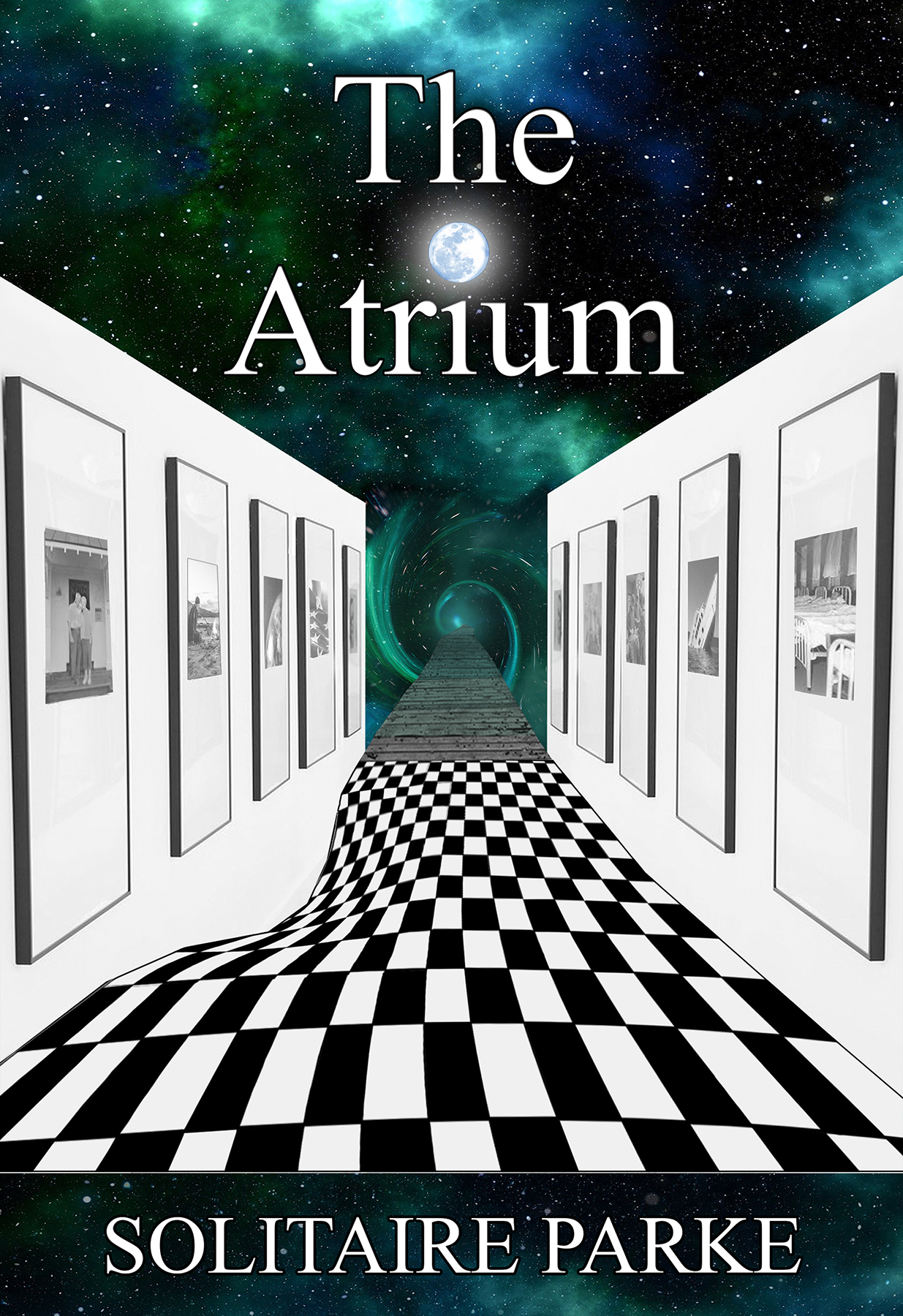
You have just experienced a traumatic car accident and then suddenly find yourself within a long, roofless, hallway that appears to be an atrium. This mysterious hallway is decorated with framed pictures that depict doorways into key moments in your life.
From a young boy to an older adult, a man navigates through a journey of self-reflection that forces him to confront prior life decisions and trauma that have shaped his existence. Reliving these past events causes him to examine his emotions, morals, and motives, and evaluate how he can overcome his past indiscretions and experience a life that is enriched in compassion and purpose rather than self.
The Atrium causes us to take a good look at how we treat other people, reevaluate our past, and create a new paradigm for the future that will alter our outlook and empower not only our lives but those around us.
Solitaire allows us to see the battle of the life and death experience by adding a layer of tension and anticipation, while demonstrating that there is still the possibility for growth and redemption.
Solitaire
Lessons from Isaac Asimov: Writing Tips for Success
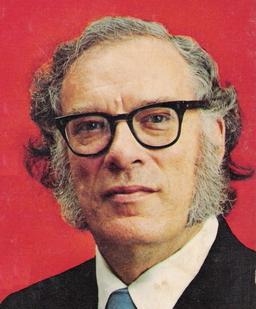
Isaac Asimov (January 2, 1920 – April 6, 1992) was an American writer and a professor of biochemistry at Boston University. Asimov was considered one of the “Big Three” science fiction writers along with Robert A. Heinlein and Arthur C. Clarke. He was a prolific writer and wrote or edited more than 500 books within his lifetime. He is most well known for his science fiction, but also wrote mysteries, fantasy, nonfiction, and popular science.
He started with a series of science-fiction novels in the 1950’s, which includes the classic Foundation Series, and his writing in time extended into non-fiction. He wrote works for popular science, guidebooks to classic novels like Gulliver’s Travels and Paradise Lost, and even a 1,200-page Guide to the Bible.
He wrote on numerous other scientific and non-scientific topics, such as chemistry, astronomy, mathematics, history and literary criticism. He even wrote a few joke books and a book of limericks, but he didn’t stop there. He wrote a Guide to Shakespeare and a thorough Chronology of the World. By publishing his Three Laws of Robotics in 1942, Isaac Asimov defined rules for humans and robots to coexist.He brought a new understanding of robots and their relationship between machines and humans which led to modern movies like I, Robot and Bicentennial Man. Asimov enlightened our imaginations.
What can we learn from this amazing writer?
Make the time to write – no excuses. Asimov had many duties but always kept himself on a tight schedule and made the time for his writing. He went from can till can’t.
Stick to what you know. We all have a circle of competence – an area of earned knowledge. Learn to know the limit of that circle and stick within that limit to keep the advantage. (Asimov wrote the books but let screen writers execute the movies)
Find what you love and have unstoppable determination. (Asimov simply “had” to write. It would have been unfathomable not to.)
Never stop learning – have a thirst for knowledge and do massive amounts of research.
Never let the fear of criticism and perfectionism hold you back. Continue striving and writing. Be prepared for imperfection and correct your result, not your process.
Commit to your writing or everything will distract you. Don’t be stopped by a creative block. If one project isn’t working, move on to another.
“Knowledge is not only power; it is happiness,
and being taught is the intellectual analog of being loved. – Isaac Asimov
Solitaire

 Solitaire Parke - Sci-Fi/Fantasy Books


