Category Archives: writing ideas
Communicate Effectively – Resonate with Your Reader

Communicating effectively relies on an understanding of the language you’re speaking. It can be potentially frustrating to your readers if they can’t understand what you’re trying to get across to them.
For instance, if the person you’re trying to communicate with speaks German, it won’t matter how beautiful your French sounds. The line of communication is still broken if they don’t understand what you are trying to say.
As a writer, I’m not speaking about literal languages but writing that makes a connection by not leaving out key details or putting in unnecessary ones, leaving the reader very confused or disconnected from your book.
As the author, you know what you’re trying to say and understand it perfectly, but if it leaves your prospective reader feeling overwhelmed without a more understandable explanation, then you may have lost a sale on that book.
When writing a book description or even a book title, it would be wise to consider what you are trying to communicate. Does it connect with the genre of book you’re writing? You’ve all probably read a book title and wondered why it was even in that genre because it didn’t make sense. It all comes down to awareness.
If you’ve ever read book reviews, a simple strategy for finding out what readers like or dislike about books will come to light. They often describe things differently than the writer would and reveal what language resonates with them, which can be very helpful. It may or may not change anything about the way you pen your novel, but it does give you valuable incite into how your readers view things.
Feedback from other people is a good way to discover the good and the bad of your novel, which is valuable for future reference. Knowledge is always a beneficial objective!
I welcome your comments. Say hello below!
Solitaire
Essential Tips for First-Time Authors

I think the most important first step is to ask yourself what kind of book it will be. Fiction, non-fiction, historical, horror, science fiction, fantasy? Before you can get started, this one question needs to be answered before it’s possible.
Regardless of age, life experience will play a part in what you decide to put to pen, but it will be infinitely easier if you write about what you know. Speaking of pens, how do you see yourself punching away at this new endeavor? Pen/pencil and paper or with a computer? Whatever happens to be within your grasp will be where you start but don’t let it stop you from working toward your dream. If you choose a computer, then the next decision will be which piece of software to use. So now we’re talking about what your budget looks like, and there is some good news. Free software is available to help get you started in lieu of purchasing Microsoft Word or other writing software. Do the research and find out which will be the best fit for you.
The next decision is what type of book are you seeing in the mind’s eye? A short story, a novella, a novel, or a compilation of novels making a series of interconnected characters? Figure that out and your task will be made easier.
With each book you write, expect there to be a huge amount of research before the smoke clears on your finished work. If you write about what you know, there will still be research to perform because none of us knows everything about any given subject.
The next question revolves around preliminary functions like an outline of where the book will be going from chapter to chapter, or do you really need one? From author to author this one question has a variety of responses and none of them are wrong. Some of us use outlines or storyboards, some of us don’t. Whichever way you go, write a lot.
I’m a proponent of critical thinking, and the long and short of that boils down to who, what, why, where, when, and how with every page you write. I call them the six deadlys, and you’ll get sick of asking the same questions every day of your writing career, but there’s no living without them. The day you stop asking these questions is the day mistakes will overtake you.
Talk frequently to friends and family about your book prior and during the writing process. It will help you to stay fresh as they give you added spark and suggestions talking about your project.
Read more than you write. Select books from other authors with the same genre and compare what you’ve written with what you’ve read. It will help the number of potential errors before they happen.
Research which titles have already been used and stay away from repeats whenever possible. Look for ways to make your story different, thereby making it stand out from the rest of the stories within the same genre.
Last, but certainly not least, know what your audience is looking for and stay within those parameters. If it’s a child’s book, stay away from adult concepts and write to the age level of your audience.
These are some ideas that might be helpful to a first-time author. There are many more things that I wish I had known when I started writing. I recently created a book that might help you to avoid some of the mistakes that I made along the way and make your path a little easier to get your works published. If you’ve always wanted to write a book and get it published, this will instruct you how to accomplish your dreams of being an author. Good luck and have a great writing experience! Click here for The Triple Threat.

Solitaire
Help – How Do I Write a Novel?

Writing your first novel can make you craaaazy!!! Do you have a process , or should you even have one? Maybe you’ve taken a class on writing but are still unclear where to begin. If this is where you’re coming from, then hang onto your hats because I’d like to share something with you.
I’ve been there! You are not alone, so don’t worry. This writing process is the reason for my next book –
THE TRIPLE THREAT
(How to write a novel and stay sane in the process)

Hi, I’m Solitaire Parke and I write science fiction, urban fantasy, horror/thriller, larger world and poetry books. I’ve been writing for as long as I can remember, and I’ve made my fair share of mistakes along the way. Hopefully, I can help you avoid some of those same mistakes and your novel can become a reality instead of just a dream.
I believe everyone has at least one good book within them, probably more. But if you don’t know where to start, that’s a problem. So, I’m attempting to share some of the knowledge I’ve gained along my writing journey in the hope that your dream can come to fruition.
The Triple Threat will cover
Where to start
Outlines
Research
Plots and Subplots
Characterization
Dialogue
Showing not Telling
Conflict
Timelines
Helpful Templates
Editing
Cover Art
Publishing
and much more within each chapter – including examples.
Understanding what you’re writing and finding the answers to all your questions will shape what and how your novel is written and ultimately make your readers (hopefully, a lot of them) happy, and anxious to get your next book when it’s published. Not to mention, the satisfaction you receive from being able to put your thoughts down in a paperback (e-book or audiobook) is well worth all the time and effort, and something you can be proud of for the rest of your life.
The TripleThreat is in its final editing stage and will be out very soon. So, stay tuned for further updates. Happy reading to everyone – and hopefully you’ll be writing your own novel in the near future! If you have any questions, please feel free to leave a comment or contact me.
Solitaire
New books and Revisions

Here I am back again after Memorial Day, working on my latest book “Between Two Worlds.” I’m in the fifth chapter and going strong, but MS Word is being the usual annoying program that it is and slowing me down. I’d really rather concentrate on including everything that should be in the chapter, but no, here we go again with formatting issues. OK, I have to admit that some of the problems might be me, but whatever it is, my editor will figure it out if I don’t. Right now it’s a work in progress that’s coming along nicely.
I’m also working on a revision for one of my previous books – having the interior re-edited and having a new book cover as well. I’m creating a second book as a sequel, making this a saga. So, my work is cut out for me in the days ahead. Plenty to do. It will probably have typos, possible plot holes and characters that I’m not sure what to do with, but it will all work itself out in the end and hopefully create a two-book thriller that will keep people up at night. That’s the plan, anyway.
Every now and then I take a break to get some new input, whether it be from watching a movie or getting feedback from those around me on a particular character or subject. It helps to get a different point of view to make things well rounded or to bring up something I hadn’t thought of which could add to the story structure. Various forms of research are always needed, depending on what subject you are tackling and how much you know or don’t know , and how critical it is to making things accurate. If you decide that it’s not what you wanted – rebuild it. Read through from start to finish and you’ll catch things you missed. You have the power to create whatever you want for your particular world or story. That’s your superpower as the author and it’s pretty tremendous.
So good luck to all you writers out there who are clacking away on your computers or brainstorming for your next project. Keep up the good work and I hope you finish an amazing book!
Solitaire
Insights from an Author’s Desk – The Writing Process
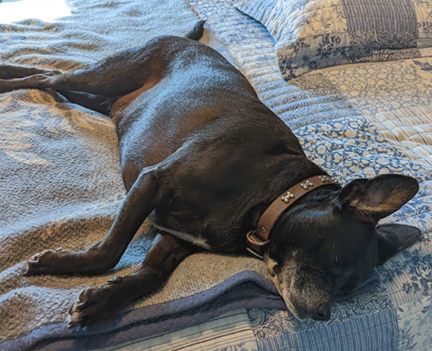
There is no particular time or place for writing – it happens when it suits you best and everyone has his or her individual approach. I drink a lot of coffee, the think drink. My favorite of late is a mocha blend. I have two dogs who can be pretty distracting, but only when someone comes to the front door. They’re couch potatoes the rest of the time.

Writing Tips from Well-known Authors

Writing success comes down to hard work, imagination, more hard work, passion – and then more hard work. Even if you are an absolutely fantastic writer who will be remembered for years to come, you will still most likely receive a good amount of criticism, rejection, and possibly ridicule before you get there. It happens to everyone, no matter whom they are, and should come as no real surprise. These writers, having been through it all, offer us some writing tips without pulling punches.
- I would advise anyone who aspires to a writing career that before developing his talent he would be wise to develop a thick hide. — Harper Lee
- A scrupulous writer, in every sentence that he writes, will ask himself at least four questions, thus: What am I trying to say? What words will express it? What image or idiom will make it clearer? Is this image fresh enough to have an effect? And he will probably ask himself two more: Could I put it more shortly? Have I said anything that is avoidably ugly?. — George Orwell
- Find a subject you care about and which you in your heart feel others should care about. It is this genuine caring, and not your games with language, which will be the most compelling and seductive element in your style. ― Kurt Vonnegut
- In the planning stage of a book, don’t plan the ending. It has to be earned by all that will go before it. — Rose Tremain
- You don’t start out writing good stuff. You start out writing crap and thinking its good stuff, and then gradually you get better at it. That’s why I say one of the most valuable traits is persistence. — Octavia Butler
- You can’t wait for inspiration. You have to go after it with a club. ― Jack London
- Introduce your main characters and themes in the first third of your novel. If you are writing a plot-driven genre novel make sure all your major themes/plot elements are introduced in the first third, which you can call the introduction. Develop your themes and characters in your second third, the development. Resolve your themes, mysteries and so on in the final third, the resolution. — Michael Moorcock
- Writing a book is a horrible, exhausting struggle, like a long bout with some painful illness. One would never undertake such a thing if one was not driven on by some demon that one can neither resist nor understand. — George Orwell
- There are three rules for writing a novel. Unfortunately, no one knows what they are. ― W. Somerset Maugham
- If you don’t have time to read, you don’t have the time — or the tools — to write. Simple as that. – Stephen King
- The nearest I have to a rule is a Post-it on the wall in front of my desk saying ‘Faire et se taire’ (Flaubert), which I translate for myself as ‘Shut up and get on with it.’— Helen Simpson
- Don’t tell me the moon is shining; show me the glint of light on broken glass.– Anton Chekhov
- Remember: when people tell you something’s wrong or doesn’t work for them, they are almost always right. When they tell you exactly what they think is wrong and how to fix it, they are almost always wrong. – Neil Gaiman
- The main rule of writing is that if you do it with enough assurance and confidence, you’re allowed to do whatever you like. (That may be a rule for life as well as for writing. But it’s definitely true for writing.) So write your story as it needs to be written. Write it honestly, and tell it as best you can. I’m not sure that there are any other rules. Not ones that matter.— Neil Gaiman
- If writing seems hard, it’s because it is hard. It’s one of the hardest things people do. – William Zinsser
- Get through a draft as quickly as possible. Hard to know the shape of the thing until you have a draft. Literally, when I wrote the last page of my first draft of Lincoln’s Melancholy I thought, Oh, shit, now I get the shape of this. But I had wasted years, literally years, writing and re-writing the first third to first half. The old writer’s rule applies: Have the courage to write badly. – Joshua Wolf Shenk
- Substitute ‘damn’ every time you’re inclined to write ‘very;’ your editor will delete it and the writing will be just as it should be. – Mark Twain
- The first draft of everything is shit. -Ernest Hemingway
- Start telling the stories that only you can tell, because there will always be better writers than you and there will always be smarter writers than you. There will always be people who are much better at doing this or doing that — but you are the only you. ― Neil Gaiman
- You must stay drunk on writing so reality cannot destroy you. ― Ray Bradbury
- Don’t take anyone’s writing advice too seriously. – Lev Grossman
Even famous authors on occasion have a tough time, and often go through periods of self-doubt. So take a lesson from them and never give up. Don’t put off your writing plans. There has never been a better time than now to realize your dream of becoming a published author. Tell your story and let your voice be heard!
Solitaire
Outlines, Writing Goals and Cacophony
Authoring a book is not an easy endeavor. Setting goals – daily, monthly, and yearly keeps you on track to a finished project and a successful career if that’s what you are after. If you are a short story writer, you might aim for one story per month. Writing a novel may be more difficult so finishing a certain number of pages a day or week could be your goal. Developing good habits, like writing at a certain time or number of hours per day, keeps you productive and gives you the right mind-set for finishing your project. Schedules always change and you need not feel guilty if something comes up and you have to adjust yours. It’s all part of a writer’s world.
Do authors need a detailed outline before starting a novel? It really depends on the author. Some authors may have an outline in their head and can just sit down and start writing or create as they go along, while others find it beneficial to create a story structure beforehand. It gives you the opportunity to break the story down into smaller parts, even chapters, helps to keep your timelines straight, and gives you a direction for your story line. In the end, you might do a little of both since you can change anything necessary to flesh out your story. However your creative process works will be the best roadmap for you.
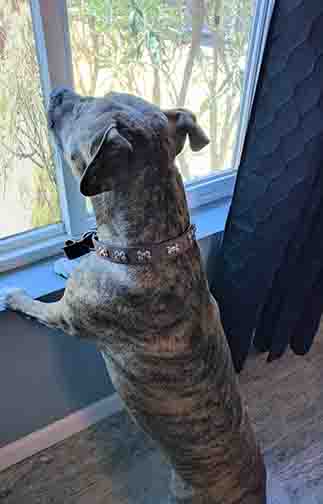
Life continues to go on around you, which also determines how much work can be done at any one time. For instance, right now we’re having our yard landscaped and the amount of noise can get crazy. Most of that cacophony is provided by two medium-sized dogs who seem to think that their territory is being invaded and that it is their sworn duty to protect us from said invaders. The fact that we invited the crew onto our property makes no sense or difference to our canine protectors, so they continue to do their jobs relentlessly and with a good deal of commotion. It is endearing, but at the same time hard to concentrate on writing.
It’s always going to be something that infringes upon your work time. You just learn to go with the flow and carry on, believing that your goals will be achieved. Aim to make your goals attainable, not so high that it sets you up for failure. Manage your time wisely. Rather than a rigid schedule, be devoted to your writing passion.
Solitaire
A Writer’s Secret Ingredient?

Perusing the web this week I discovered a guest post that I found to be particularly outstanding and possibly very helpful to other writers. It was a recent post from author and guru of all things writing and publishing, Jane Friedman. I regularly get her newsletter, Electric Speed, which contains a myriad of information for writers. (I highly recommend subscribing to it, by the way.) https://janefriedman.com/.
The post is about a secret ingredient that can keep readers riveted to your book down to the very last line, rather than lose interest and have it fall to the floor. The guest was C. S. Lakin, a writing coach, workshop instructor, blogger and award-winning author of 30+ books.
So, check out this post at the following link –
https://www.janefriedman.com/the-secret-ingredient-of-a-commercially-successful-novel/
Solitaire
Forthcoming book – The Atrium
Never give up – Never surrender!

It’s a line spoken by actor, Tim Allen, from a movie – “Galaxy Quest.” It’s one of the funniest sci-fi spoofs ever made. It’s just one of those feel-good movies that you watch again and again, and it has a great message. It’s so easy to get lost amidst the responsibilities and difficulties of life. We struggle to find the time to write or create, and sometimes it can be all too confusing and disheartening to keep up the drive. Many of us are working day jobs and trying to fit in our writing or whatever our passion is, around everything else. What we need is creative clarity about what we’re creating and why we’re doing it in the first place. Go back to the ”well” so to speak, and dig deep for your source of inspiration. Do you have a great story that needs to be expressed, whether it’s as an author or in a painting? Someone out there needs to hear or see what you have to say and it will profoundly connect with them in a meaningful way, and that is important. It means continuing to be an artist even when there are setbacks, and a lack of validation. That clarity will help you to prioritize amidst your busy life, and your amazing creation will materialize and give the world something to think about besides its everyday routine. To be elevated above the mundane into a place that is intriguing, magical, whimsical or exquisite is what teaches us how to thrive and experience truly being alive!
Never give up – Never Surrender!
Solitaire
Check out my website for upcoming books and fun features.
Fantasy Writing Tips From “Game of Thrones” Author, George R.R. Martin!

“Game of Thrones” is back for the final season. Who hasn’t watched or at least heard of the TV show, “Game of Thrones?” The author, George R. R. Martin, has been writing Fantasy books for years before this series came out. I have been a fan of his for a long time. Since I write Science Fiction/ Urban Fantasy myself, I was curious what his thoughts were on the subject. This article on the site, Lifehacker.com, peaked my curiosity. Here are his top 10 writing tips for Fantasy:
- Don’t limit your imagination
- Choose your point-of-view characters to broaden the narrative’s scope
- It’s okay to borrow from history
- Talk to real people for a believable point of view
- Grief is a powerful tool but don’t overdo it
- Violence should have consequences _ so spare nothing
- Avoid fantasy clichés
- The world is full of “grey” characters to draw from
- Juggling lots of characters takes skill and luck
- All men must die, but we don’t have to give way to despair
To get the details of each of these tips, click on the link below and enjoy!
“The best fantasy is written in the language of dreams. It is alive as dreams are alive, more real than real … for a moment at least … that long magic moment before we wake.”
George R.R. Martin
If you have any tips that have been helpful to you, I’d love to hear about them! Have a great day!
Solitaire
Check out my Dragomeir Series and Prequel books at my website –


 Solitaire Parke - Sci-Fi/Fantasy Books
