Blog Archives
Communicate Effectively – Resonate with Your Reader
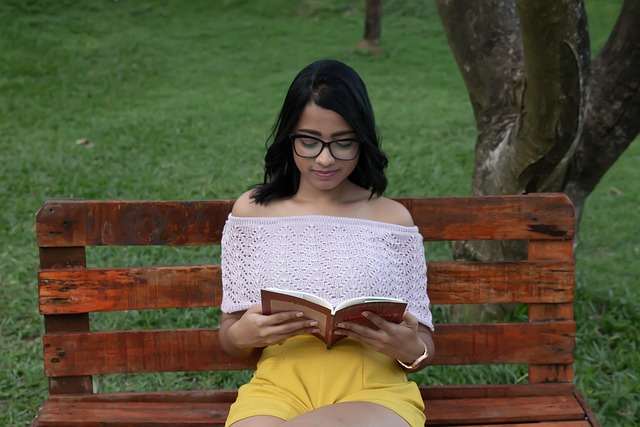
Communicating effectively relies on an understanding of the language you’re speaking. It can be potentially frustrating to your readers if they can’t understand what you’re trying to get across to them.
For instance, if the person you’re trying to communicate with speaks German, it won’t matter how beautiful your French sounds. The line of communication is still broken if they don’t understand what you are trying to say.
As a writer, I’m not speaking about literal languages but writing that makes a connection by not leaving out key details or putting in unnecessary ones, leaving the reader very confused or disconnected from your book.
As the author, you know what you’re trying to say and understand it perfectly, but if it leaves your prospective reader feeling overwhelmed without a more understandable explanation, then you may have lost a sale on that book.
When writing a book description or even a book title, it would be wise to consider what you are trying to communicate. Does it connect with the genre of book you’re writing? You’ve all probably read a book title and wondered why it was even in that genre because it didn’t make sense. It all comes down to awareness.
If you’ve ever read book reviews, a simple strategy for finding out what readers like or dislike about books will come to light. They often describe things differently than the writer would and reveal what language resonates with them, which can be very helpful. It may or may not change anything about the way you pen your novel, but it does give you valuable incite into how your readers view things.
Feedback from other people is a good way to discover the good and the bad of your novel, which is valuable for future reference. Knowledge is always a beneficial objective!
I welcome your comments. Say hello below!
Solitaire
Essential Tips for First-Time Authors

I think the most important first step is to ask yourself what kind of book it will be. Fiction, non-fiction, historical, horror, science fiction, fantasy? Before you can get started, this one question needs to be answered before it’s possible.
Regardless of age, life experience will play a part in what you decide to put to pen, but it will be infinitely easier if you write about what you know. Speaking of pens, how do you see yourself punching away at this new endeavor? Pen/pencil and paper or with a computer? Whatever happens to be within your grasp will be where you start but don’t let it stop you from working toward your dream. If you choose a computer, then the next decision will be which piece of software to use. So now we’re talking about what your budget looks like, and there is some good news. Free software is available to help get you started in lieu of purchasing Microsoft Word or other writing software. Do the research and find out which will be the best fit for you.
The next decision is what type of book are you seeing in the mind’s eye? A short story, a novella, a novel, or a compilation of novels making a series of interconnected characters? Figure that out and your task will be made easier.
With each book you write, expect there to be a huge amount of research before the smoke clears on your finished work. If you write about what you know, there will still be research to perform because none of us knows everything about any given subject.
The next question revolves around preliminary functions like an outline of where the book will be going from chapter to chapter, or do you really need one? From author to author this one question has a variety of responses and none of them are wrong. Some of us use outlines or storyboards, some of us don’t. Whichever way you go, write a lot.
I’m a proponent of critical thinking, and the long and short of that boils down to who, what, why, where, when, and how with every page you write. I call them the six deadlys, and you’ll get sick of asking the same questions every day of your writing career, but there’s no living without them. The day you stop asking these questions is the day mistakes will overtake you.
Talk frequently to friends and family about your book prior and during the writing process. It will help you to stay fresh as they give you added spark and suggestions talking about your project.
Read more than you write. Select books from other authors with the same genre and compare what you’ve written with what you’ve read. It will help the number of potential errors before they happen.
Research which titles have already been used and stay away from repeats whenever possible. Look for ways to make your story different, thereby making it stand out from the rest of the stories within the same genre.
Last, but certainly not least, know what your audience is looking for and stay within those parameters. If it’s a child’s book, stay away from adult concepts and write to the age level of your audience.
These are some ideas that might be helpful to a first-time author. There are many more things that I wish I had known when I started writing. I recently created a book that might help you to avoid some of the mistakes that I made along the way and make your path a little easier to get your works published. If you’ve always wanted to write a book and get it published, this will instruct you how to accomplish your dreams of being an author. Good luck and have a great writing experience! Click here for The Triple Threat.

Solitaire
New Book Available – The Triple Threat
For those who have always wanted to write a novel, but had no idea what the process includes – Here is a book that will give you the information you need to make that dream a reality.
The Triple Threat (How To Write A Novel And Stay Sane In The Process) gives you the answers to your questions plus much more, including examples and helpful templates to make your writing experience easier. It will also keep you from making many of the mistakes that first-time authors have made, myself included. Click on the book below to locate a copy –
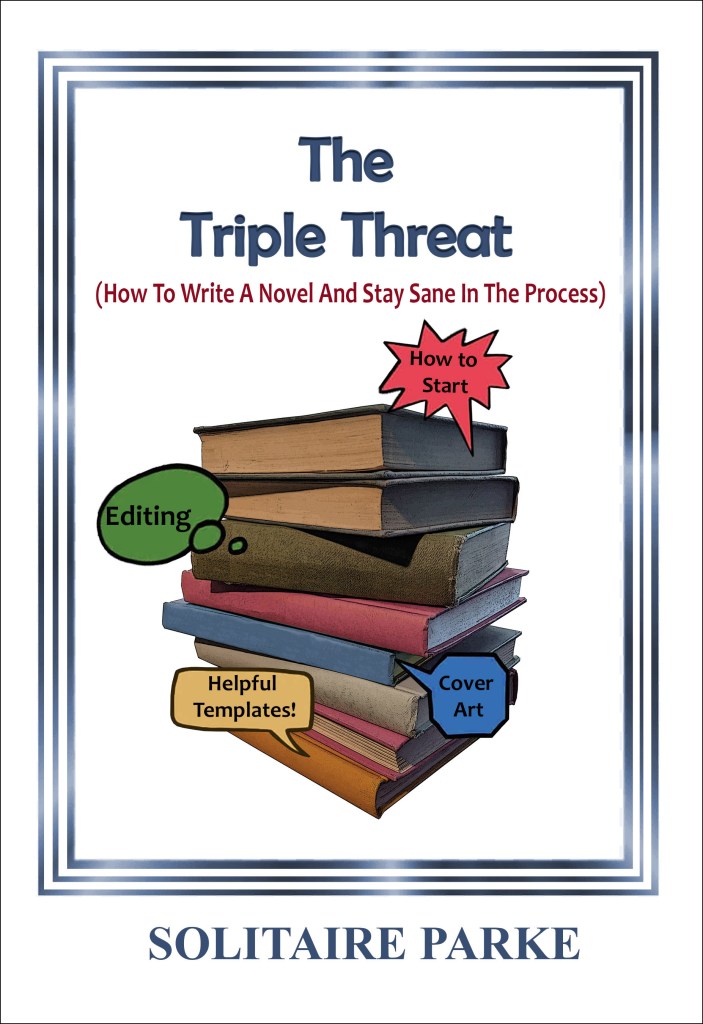
I hope this book is helpful in your writing journey.
Solitaire
Accepting Being Imperfect


Kintsugi is the Japanese art of mending broken pottery by joining pieces back together and filling cracks with lacquer mixed with gold. It highlights the flaws in the repaired item. In our world today there seems to be no end to the broken pieces of our society and we are all a part of it in some way. But these pieces can be put back together again and be made stronger than before with work on our part. I am reminded of this when I look at Kintsugi. It turns into a beautiful piece of art.
Accepting our flaws is a fundamental part of the writing process as well. No author writes a perfect first draft. It reminds me of one of my books written years ago that just never quite hit the mark. I ended up tearing it apart, section by section, and rewriting it at least three times. There was a point when I had almost given up on it altogether and considered scrapping it completely. It was very disheartening and left me wondering why I was even writing it at all.
I’m not one to quit easily, so I took it as a challenge, and reworked the entire story so that it became a cohesive plot filled with much more exciting actions and a richer storyline. As a result of fixing the flaws, it became a much fuller narrative that I was pleased to publish – Tinker Smith & the Conspiracy of OZ.

A group of ten genetically altered children are attempting to save the world
from a technological, power hungry scientist,
the self proclaimed Wizard of Oz,
who is determined to control the world with a computer virus.
Johnny and his father meet Tinker, one of the ten children
and together they forge ahead in the hope of survival
in a strange world of machination and espionage.
None of us are perfect, and in the artistic process of writing it sometimes means tearing apart our ideas, then putting them back together again to be stronger and more engaging.
It’s much like Kintsugi. From imperfect to amazing!
Happy Reading to everyone!
Solitaire
6 Questions Writers Often Ask
What’s the difference between a story’s “hook” and the “inciting incident”?
The “hook” of the story is just the opening sentence or paragraph that attracts the reader’s attention and fires up their curiosity to keep reading further. An example would be someone running for their life, looking up at the sky and seeing something unusual, a dead body being found in a boathouse, a huge explosion, or anything that creates an urgency for the reader to want to discover “why.” The actions or emotions create an urgency to find out the backstory or motivation behind what is happening.
The “inciting incident,” is the key event in the main character’s life that gets their story moving forward. It sets them on a journey that continues throughout that character’s life, literally causing them to take some action to try to restore balance or stability. For example, in The Wizard of Oz, the tornado that spirits Dorothy away to Oz is an inciting incident. It motivates her need to do everything she can to return home. In The Mysterious Island, a mega storm causes an air balloon to crash on an island. The passengers are then in survival mode which ultimately motivates them to find a way off the island and back to civilization.
Is it okay to eliminate “he said/ she said” when there are just two people talking in a dialogue?
This is a question that I considered in my writing. The answer is, yes. If just two characters are talking, the dialogue tag can be omitted. It all depends on whether there is clarity for the reader. If it is obvious which person is speaking, no tag is required. However, sometimes several sentences of narration will come between lines of dialogue (for example, the point of view character’s thoughts). In that case it might be necessary to tag the next person who is speaking. Otherwise, the reader may not be sure which one is resuming the conversation. Clarity is the main objective here because we don’t want to lose or confuse the reader.
Is it a good idea to use a Prologue?
Many bestselling authors do start their books with a prologue – but keep in mind that these authors have established a large readership who will buy their books regardless of style. That being said, if you need to let the reader know information that is not in the novel, set up the main story, or jump into the middle of a story without having to set a scene or explain main events, you might need to have one. If the understanding of your story is not damaged in any way, then you probably don’t need one.
What if I can’t find the genre of my story? Is “literary” a genre?
If your story does not fall into the broad popular genres (Mystery, Thriller, Romance, Science Fiction, Fantasy, Horror) yet is still popular fiction, it is often referred to as simply “mainstream fiction.”
How long should my book be?
From a publishing standpoint, it doesn’t matter how many pages you’ve written. What matters is word count. Any publisher or agent will want to know how many words you’ve written, not how many pages. Below is a quick cheat-sheet on word count.
Flash Fiction: Generally, up to 1,000 words.
Short Story: 1,000 to 20,000 words
Novella: 20,000 to 80,000 words.
Novel: 80,000 to 100,000 words. This is the sweet spot.
Science Fiction or Fantasy: Can be over 100,000 words, but the content should be strong enough to warrant the size.
While you may come across different schools of thought on these word counts, consider these numbers an average of industry standards.
The important thing is to enjoy writing and flexing your creative muscles. Each of these pieces will fall into place as the process evolves for you. Focus on your work first, then worry about the rest.
Solitaire
Surviving the Scorching Summer Heat
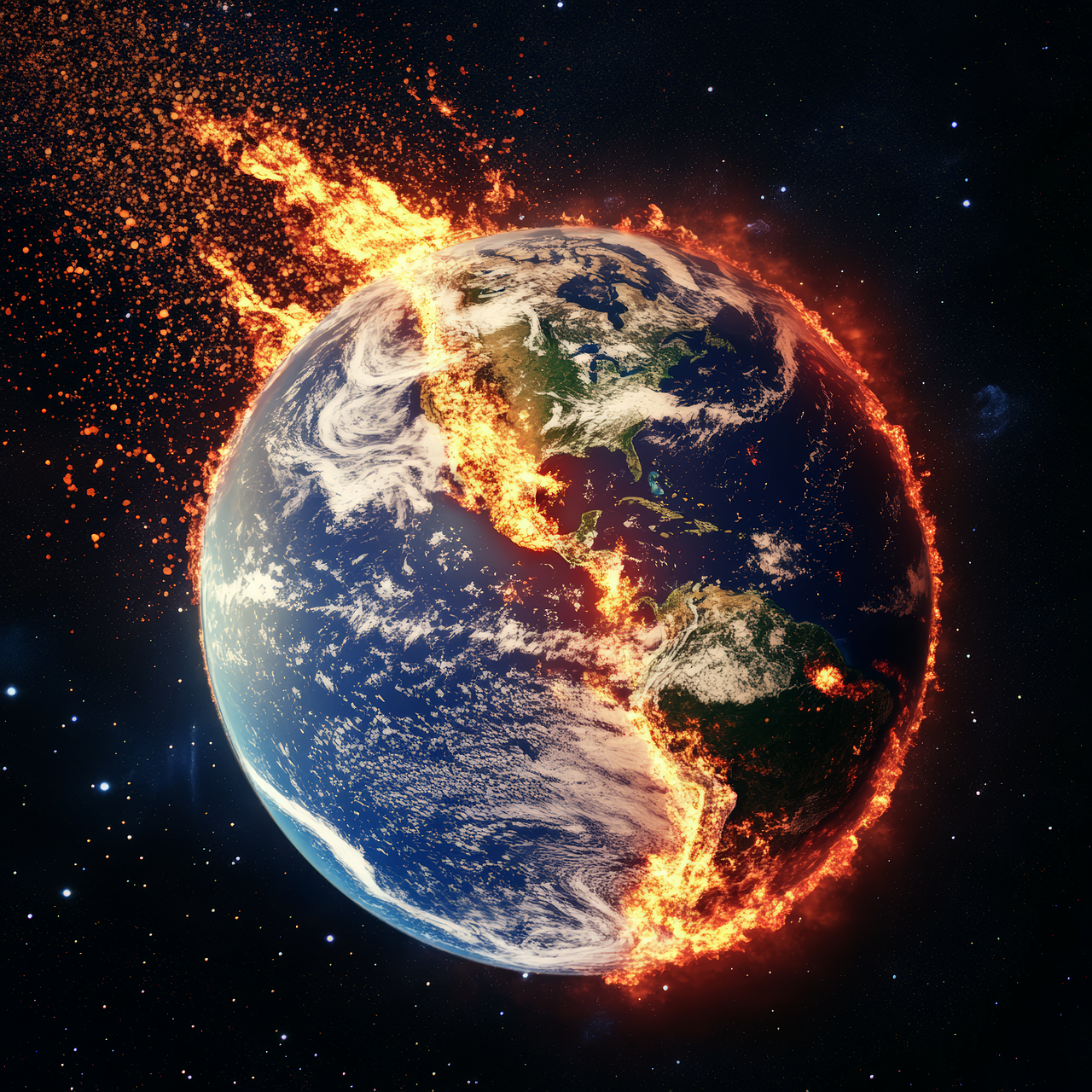
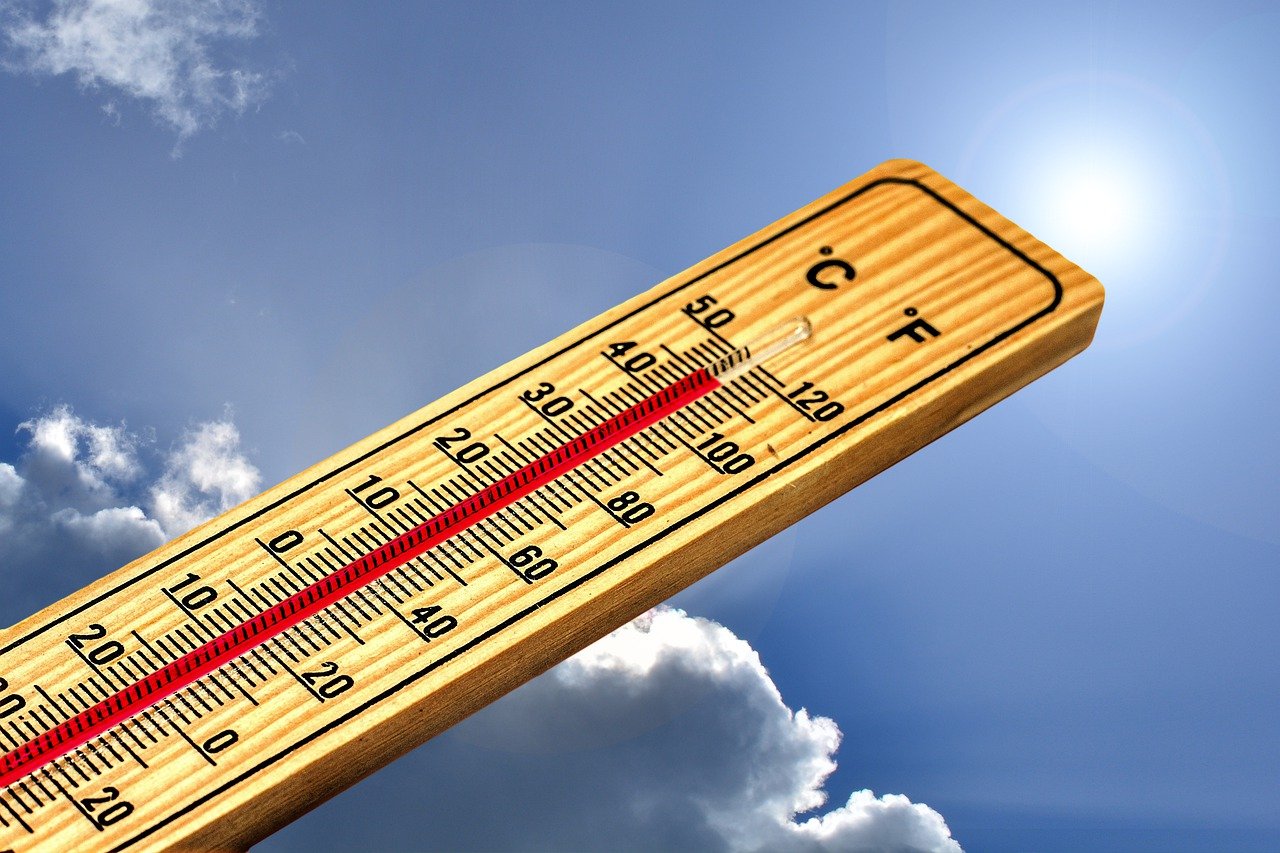
We’re having another record-breaking hot summer this year, not only where I live but across the globe. It’s having an impact on how we live and what we do. More people are staying inside for longer periods of time due to the impact of heat on the human body. It’s possible to cook on our sidewalks here in Arizona, as crazy as that sounds. Outdoor barbecue has taken on a whole new meaning! The kids are staying out of the sun in the middle of the day and limiting their outdoor activities to the mornings or late afternoons and evenings when the sun isn’t so intense or has disappeared beyond the horizon. Even my dogs don’t want to be outside for long.
As an author and digital artist, I am perfectly happy to be inside my office where I can be comfortable in the air conditioning with my ceiling fan whirring over my head to keep me cool. That’s the most productive atmosphere for me, and my favorite setting. If I want to see the outdoors I can just look out of the window next to my desk and pull back the curtains to let in the light, without having to deal with the heat.
If you work from home, adjust writing routines when necessary, by working during cooler parts of the day, such as early mornings or evenings. Setting realistic goals and focusing on specific tasks like editing or mind mapping during peak heat hours can also be helpful. Writers may need to be especially mindful of channeling and shaping emotions in their work, recognizing the potential for heightened emotional responses during heatwaves. You can also try working from libraries or cafes to make your day more interesting.
Some writers find that the summer heat actually sparks their creativity. Ernest Hemingway embraced writing in the summer heat and his style flourished during these periods. He spent significant time in hot locations like Madrid, Spain and Key West, Florida.
If you’re in one of those excessively hot areas of the world, be kind to yourself and stay hydrated, comfortable, and safe from the effects of the hot sun. Many children are now heading back to school, which will keep them busy for a good part of the day. Stay indoors when you can and protect yourself if you do go outside with sunscreen, a hat or umbrella and wear loose, light clothing that will allow you to stay cool.
Being indoors gives us all a great opportunity to explore our world and other worlds through writing and reading!
Have a great summer!
Solitaire
New books and Revisions

Here I am back again after Memorial Day, working on my latest book “Between Two Worlds.” I’m in the fifth chapter and going strong, but MS Word is being the usual annoying program that it is and slowing me down. I’d really rather concentrate on including everything that should be in the chapter, but no, here we go again with formatting issues. OK, I have to admit that some of the problems might be me, but whatever it is, my editor will figure it out if I don’t. Right now it’s a work in progress that’s coming along nicely.
I’m also working on a revision for one of my previous books – having the interior re-edited and having a new book cover as well. I’m creating a second book as a sequel, making this a saga. So, my work is cut out for me in the days ahead. Plenty to do. It will probably have typos, possible plot holes and characters that I’m not sure what to do with, but it will all work itself out in the end and hopefully create a two-book thriller that will keep people up at night. That’s the plan, anyway.
Every now and then I take a break to get some new input, whether it be from watching a movie or getting feedback from those around me on a particular character or subject. It helps to get a different point of view to make things well rounded or to bring up something I hadn’t thought of which could add to the story structure. Various forms of research are always needed, depending on what subject you are tackling and how much you know or don’t know , and how critical it is to making things accurate. If you decide that it’s not what you wanted – rebuild it. Read through from start to finish and you’ll catch things you missed. You have the power to create whatever you want for your particular world or story. That’s your superpower as the author and it’s pretty tremendous.
So good luck to all you writers out there who are clacking away on your computers or brainstorming for your next project. Keep up the good work and I hope you finish an amazing book!
Solitaire
How Hobbies Can Improve Your Writing

What is a hobby? As defined by the dictionary, it is an interest or activity to which a person devotes time for pleasure. Things or activities that a person does for relaxation or enjoyment.
Hobbies help to invoke passion in your life which in turn helps revitalize your writing, often by pushing your boundaries. When you give your characters interests or hobbies it fleshes out their personalities and helps the reader to be more invested and care about them. If they care about your characters, they’ll be more likely to enjoy the story and be able to make a connection. You as a writer need that passion as well. Without that enthusiasm there is little motivation to get up in the morning, head to your computer keyboard or pick up your pen and write.
Quite a few fiction writers paint. Painting helps you to look at things, create things, and show things. Anything that helps you to see is advantageous to your writing in creating characters, storytelling, locations, etc. for your books.
Giving quality time to activities you enjoy helps your performance in creative problem-solving which affects your brain’s abilities and supports your performance in life in general, as well as writing. Hobbies tend to build confidence and self-esteem. They are excellent for your mental health, they increase productivity, and can spark new ideas. When we get excited about something, it activates the reward system in the brain and motivates us to stick with it.
If you’ve ever had writer’s block, you know that sometimes you need that motivation to continue to the next chapter of your book or article. A hobby forces your mind to focus which is the enemy of writer’s block and a friend to the writer. Recharging your mind with something new or different can make all the difference in your outlook and productivity.
Hobbies give us a kind of resilience and keep us engaged so that we can write that next great novel that might be an inspiration for someone else who needs it. If you haven’t found what helps inspire you to greatness, do some exploration. There are countless ways to spark your mind!
Solitaire
12 Reasons Why Writing is Important.

- Sometimes an idea makes little sense until you can see it in words. It also helps when you’re trying to explain your idea to another person—if they can see it written down, it goes a long way for understanding.
- Communication – It is an essential skill that allows you to communicate with people. It also helps to build vocabulary skills, which in turn can improve our social skills. Nowadays we use far less words to communicate than our forefathers.
- Discipline – If you learn to write on a regular basis, it builds discipline. In other words, it provides you with direction and training.
- It engages your brain – both the creative side and the logical or analytical side, allowing you to make sense of what is being stated. It also improves memory function and helps you make better decisions.
- By writing things down we can often work through an idea or problem and come up with possible solutions. It helps to keep our thoughts organized.
- The written word very often influences how we think in society – via authors, journalists, bloggers, speechwriters, etc.
- We wouldn’t know what happened in history without those who took the time to write about it.
- Everyone has at least one book inside of them. We all have a story to tell, and no two stories are alike. The experiences of others can be very enlightening and can often influence and be of help.
- Keeping a journal is very often a means to better mental health. It is important for dealing with anxiety, depression, and other issues. You may not be able to tell someone what is bothering you, but writing down your thoughts and feelings can help you to change your outlook and reset your thinking. Writing down your anxieties or fears can often diminish them in our minds and put us in a greater state of ease. In short, it promotes emotional and spiritual well-being.
- Sometimes you need reminders of what your goals are to stay on track. You are more likely to achieve them if they are written down and you can refer to them to keep you heading in the right direction.
- Making a To Do list is often extremely helpful to organize your ideas and helps you to remember important things that need to be done. We all have busy, fast-paced lives that make it difficult to remember everything all the time.
- When you take the time to write to a loved one or a friend it forms a bond that would not otherwise have been made. You can relate something important to them without having to be where they are. It can build memories. When you take the time to write, it tells someone that you care.
Writing is more than just a means of communication; it is a powerful tool that can be used to inspire, persuade, and even change the world.
Solitaire
Insights from an Author’s Desk – The Writing Process
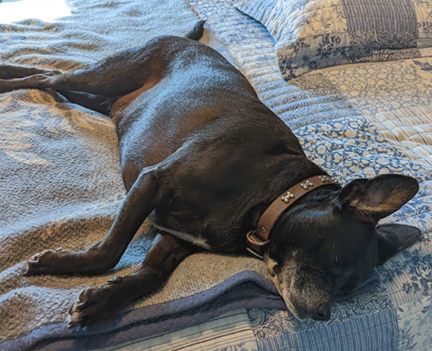
There is no particular time or place for writing – it happens when it suits you best and everyone has his or her individual approach. I drink a lot of coffee, the think drink. My favorite of late is a mocha blend. I have two dogs who can be pretty distracting, but only when someone comes to the front door. They’re couch potatoes the rest of the time.


 Solitaire Parke - Sci-Fi/Fantasy Books
