Exploring the Fascinating Architecture of Stepwells
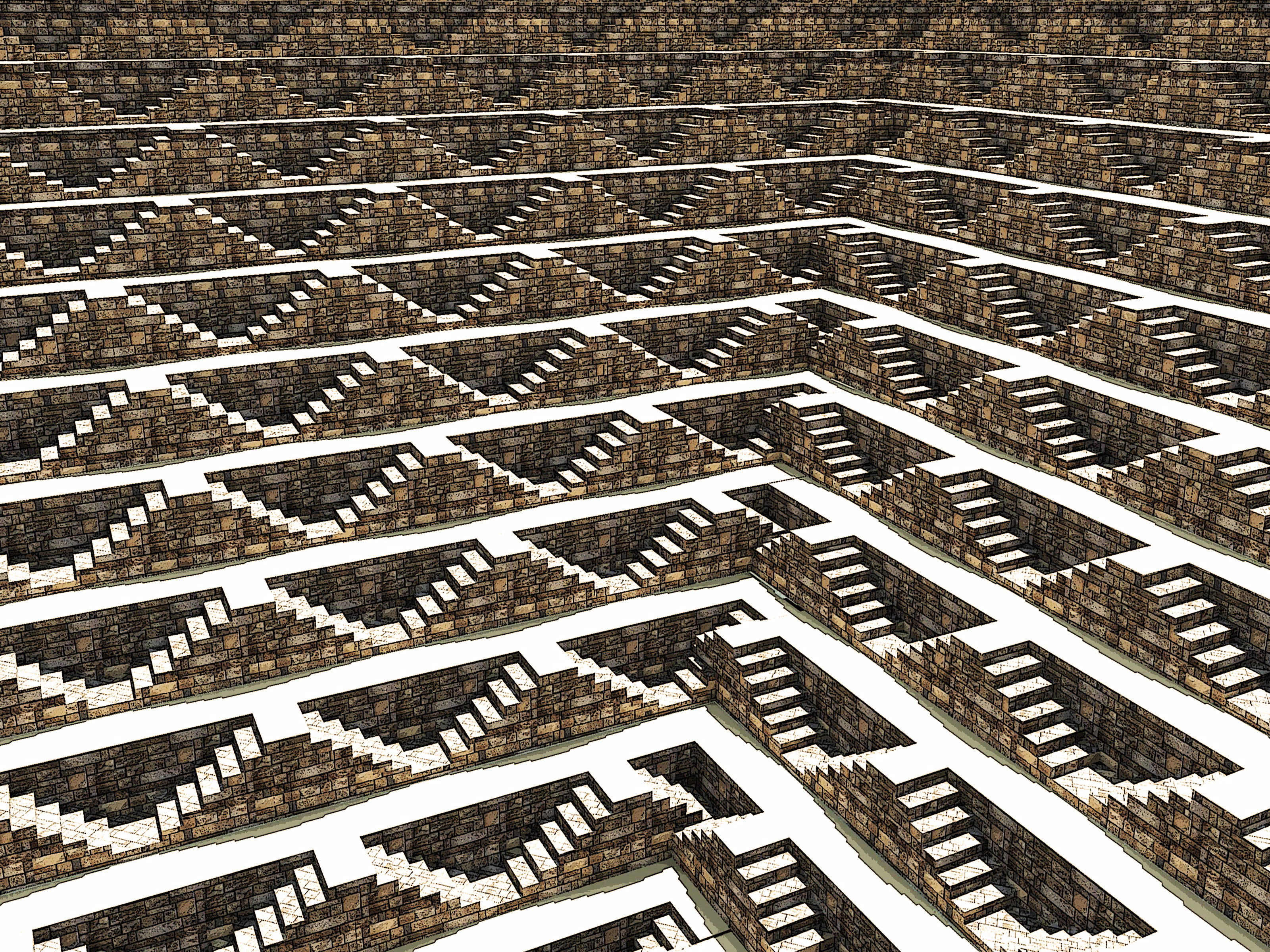
Step Well Pattern by Solitaire
In my Internet meanderings I came upon something I thought was extremely unusual and quite amazing. It was an ancient architectural marvel that served a very useful purpose and was visually outstanding – a Stepwell.
These structures are located in various parts of India and are water reservoirs created by digging deep into the ground and making use of natural layers in the earth to trap rainwater and groundwater. They are typically many levels deep (at least 25 meters or 82 feet) and can be reached by a series of stone steps.
The construction and use of stepwells went on for centuries under different dynasties. Stepwells provided people with a perennial water source in areas prone to arid climates and drought, such as Delhi and Rajasthan. The stepwells not only provided water for the people in the area, they had magnificent architecture featuring intricate carvings, and provided other social functions. There were often shaded pavilions where people could rest or gather to meet with friends and family.
They fell out of use under British rule in the 19th century. But today many have been excavated and used to divert and store excess rainwater, as well as to improve the groundwater table. They have become tourist attractions and social sites that provide employment and income for the locals. Today stepwells stand as testimony to the traditional knowledge of water systems, engineering, construction methods and craftsmanship of ancient times.
Solitaire

Posted on August 29, 2025, in Art and tagged ancient water systems, architecture, rainwater storage, solitaire parke, solitaireparke.com, water conservation, water reservoirs, water sources in India. Bookmark the permalink. Leave a comment.




 Solitaire Parke - Sci-Fi/Fantasy Books
Leave a comment
Comments 0